
Chopped Strand Mat vs Woven Roving (and Combo Mat): How to Build Your Laminate
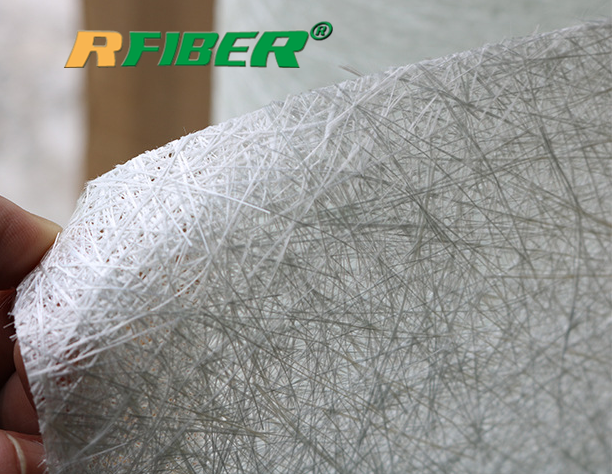
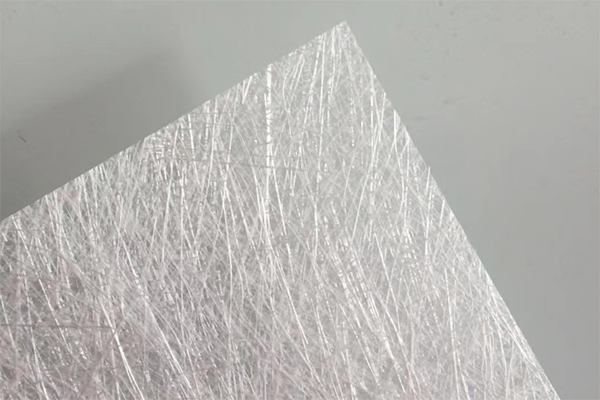
CSM starts as continuous glass that is chopped into short fibers — typically 25–50 mm — and deposited as a random web, then bonded with a powdered or emulsion polyester binder that dissolves into the resin during molding. Because no fiber runs edge to edge, strength is spread evenly in every direction, and the sheet conforms to compound curves that a woven fabric would bridge or lift off. It wets out readily, bonds well between stiffer layers, and is compatible with polyester, vinyl ester and epoxy resin systems across hand lay-up, spray-up and infusion.
That same random architecture is the trade-off. The fluffy web traps more resin than a woven construction, so resin consumption per finished millimeter is higher and the absolute strength is lower than continuous fiber — a matter of estimating resin honestly, not a defect. CSM is at its best where its virtues matter: gel-coat backup layers, corrosion-barrier liners, molding complex shapes, and interlayer bonding between woven plies.
The three materials, in one table
Ask which is stronger — chopped strand mat or woven roving — and you get a confident answer from almost every supplier forum. It is also the wrong first question. A laminate is not a stack of "strong" sheets; it is a set of layers, each with a job: building thickness, carrying load in a known direction, bridging complex curves, or protecting a surface. Once you assign the jobs, the material choice often makes itself: sometimes it is chopped strand mat, sometimes woven roving, frequently both alternating, and occasionally a stitched combo mat that does two jobs in one pass.
This guide compares the three material families the way production and purchasing teams actually specify them — by structure, resin behavior and process — and uses real published weight data rather than generic ranges. It ends with a worked example and an RFQ checklist you can send straight to a supplier.
Chopped strand mat: coverage, conformability and thickness build
All three are glass-fiber reinforcements, but their architecture differs in ways that decide where each belongs in a laminate.
| Chopped strand mat (CSM) | Woven roving | Combo / stitch mat | |
| Structure | 25–50 mm chopped fibers, randomly distributed, held by a powder or emulsion binder | Continuous roving bundles interlaced in warp and weft | Woven roving layer + chopped layer (optionally a surface veil) stitched into one sheet |
| Strength direction | Isotropic — similar in all in-plane directions | Directional — highest along the two fabric axes | Directional from the roving layer; conformable from the chopped layer |
| Typical role | Thickness build, transitions, complex curves, interlayer bonding | Primary structural layer | Two-layer job in one lay-up pass |
| Binder | Dissolving powder/emulsion binder | None (woven) | None — polyester stitching yarn |
| Watch out for | Higher resin uptake; drape before committing to tight radii | Weave print-through on visible surfaces; poor drape on compound curves | Handling bulk; confirm weight and width when ordering |
Ruifiber CSM — published specification table
|
Weight (g/m²) |
Tolerance | Moisture content | Breakage strength (N) |
| 100 | ±5% | ≤0.2% | ≥80 |
| 150 | ±5% | ≤0.2% | ≥80 |
| 200 | ±5% | ≤0.2% | ≥100 |
| 225 | ±5% | ≤0.2% | ≥100 |
| 300 | ±5% | ≤0.2% | ≥120 |
| 375 | ±5% | ≤0.2% | ≥120 |
| 450 | ±5% | ≤0.2% | ≥140 |
| 600 | ±5% | ≤0.2% | ≥160 |
| 900 | ±5% | ≤0.2% | ≥200 |
Width runs from 100 mm up to 3,300 mm, which covers everything from narrow pipe wraps to wide panel molds. Full details: chopped strand mat (CSM) product page.
Two things are worth reading out of that table. First, breakage strength climbs in clean steps with weight — from ≥80 N at 100 g/m² to ≥200 N at 900 g/m² — so "go heavier" has a measurable meaning, and quoting a target strength instead of a vague "heavy mat" makes your RFQ comparable across suppliers. Second, the tolerances are tight (±5% on weight, ≤0.2% moisture): moisture content matters because damp mat wets out poorly and can blister in service, so if your shop stores material through humid summers, ask how rolls are wrapped and how long they have been open.
Woven roving: directional strength
Woven roving is the heavy-duty fabric of the FRP world: bundles of continuous filaments — the same rovings used in filament winding, where common tex values run 2,400 to 9,600 — interlaced into a coarse, drapeable-weave cloth. Because the fibers run continuously along the warp and weft, load travels uninterrupted through the layer, which is why woven roving carries the structural duties in boat hulls, tanks, panels and profiles while CSM handles transitions and surface work around it.
The same weave explains its limits. Coarse bundles sit proud of the surface, so print-through is a real risk on cosmetic parts unless a mat or veil layer separates the fabric from the finish. And on compound curves the fabric resists draping in two directions at once.
Combo and stitch mats: two jobs in one pass
A woven roving combo mat stitches the woven layer and a chopped-strand layer into a single sheet; add a surface veil and it becomes a veil combo stitch mat. Ruifiber's versions use polyester stitching yarn instead of a chemical binder, so the sheet wets out quickly and carries no binder to dissolve — one lay-up pass replaces two, which is where the efficiency claim comes from.
Standard widths are 1,250 mm and 1,270 mm, sized for common mold and panel work. The stitched construction keeps the roving's directional strength and the chopped layer's rapid thickness build and surface improvement in one product; Ruifiber positions the fiberglass veil version for applications that demand higher flame retardancy and heat resistance than the polyester-veil variant. Published applications include pultruded profiles, rods, tubes and cable trays; corrosion-resistant tanks, pipes and pressure vessels by filament winding; and closed and open molding — hand lay-up, RTM and compression molding.
The trade-off is control. A stitched combo commits you to the factory's ratio of woven to chopped layers; if your laminate schedule needs to tune those independently — for instance, extra liner build-up in a corrosion zone — separate CSM and woven roving plies still give you the finer adjustment. Choose combo mats for repeatability and lay-up speed on standard schedules; choose separate plies where the schedule is engineered layer by layer.
See the woven roving combo mat and veil combo stitch mat product pages for current specifications.
Choosing by process, not by "strength"
The same part can justify different answers depending on how it is made. Use the process you actually run as the entry point.
|
Process |
Typical starting point | Why |
| Hand lay-up (complex or cosmetic parts) | CSM against the gel coat, alternating with woven roving in the structure; CSM as the final layer if the back is visible | CSM wets out fast, conforms to curves and bonds plies together; the classic alternation smooths the weave and ties the stack together |
| Hand lay-up (large flat or gently curved areas) | Woven roving combo mat | One pass delivers directional strength plus thickness build; less handling than separate plies |
| Pultrusion | Veil combo stitch mat or fabrics suited to the die; direct roving carries the longitudinal fibers | Stitched, binder-free sheets wet out continuously; the veil helps produce a smoother profile surface |
| Filament winding (tanks, pipes) | Direct roving for the strength path; CSM or veil layers in the corrosion liner |
Continuous roving builds the load path; finer mats create the resin-rich inner surface |
If a layer's job is cosmetic finish or corrosion-barrier control, that is a surface veil's job, not a heavy mat's — the fine-fiber veil (20–90 g/m²) exists precisely to create a resin-rich surface that hides coarser reinforcement.
Building the laminate: a worked example
Here is how the roles assemble into a stack. Take a corrosion-resistant storage tank made by hand lay-up — a common case where every layer has a distinct job. This is an illustration of layer roles, not an engineering design; laminate schedules for pressurized or chemical service must be validated for the resin, temperature and chemicals involved.
1.Mold release / gel coat — the finished outer surface.
2.Surface veil (fine, 20–90 g/m² class) — creates a resin-rich inner liner face so coarse fibers never touch the stored media.
3.CSM liner plies — build liner thickness with isotropic, resin-rich layers.
4.Woven roving — carry structural load in the two fabric directions.
5.CSM — bond the next woven ply and level the weave print.
Repeat 4–5 to reach design thickness; close with CSM where the back side is visible.
In pultrusion and filament winding the same logic applies with different players: a veil combo stitch mat can replace the separate veil-plus-mat passes, and direct roving replaces woven cloth as the continuous-fiber carrier.
What to confirm before you order
Weight and width ranges in this article are published product data or clearly-labeled industry conventions — confirm the exact specification against your resin and process before committing. A comparable RFQ states:
1.Laminate role of each layer (surface, liner, structural, transition).
2.Material and construction — CSM (powder vs emulsion binder), woven roving, or stitched combo.
3.Weight per layer in g/m² — for CSM, quote from the published table above; for woven roving weights, request the supplier's current spec sheet.
4.Width and roll format — standard slit widths, and splice/joint policy per roll.
5.Resin system — polyester, vinyl ester or epoxy, and cure method.
6.Process — hand lay-up, spray-up, infusion, pultrusion, winding, RTM.
7.Handling constraints — mold geometry, minimum radii, visible surfaces.
8.Documentation — technical data sheet and, for trial runs, a sample for wet-out testing in your own resin.
FAQ
Which is stronger, chopped strand mat or woven roving?
Per unit weight, woven roving — its continuous fibers carry load along the fabric axes, while CSM distributes shorter fibers in every direction. But the comparison only means something at equal weight, equal resin content and the same load direction. In practice the question is not either/or: CSM provides coverage, bonding and surface work, woven roving provides directional strength, and most hand lay-ups use both.
Can I use CSM and woven roving together in one laminate?
Yes — alternating them is the standard hand lay-up convention precisely because each covers the other's weakness: CSM smooths the coarse weave, improves interlayer bonding and slows water tracking along roving bundles; woven roving carries the load. Combo mats stitch the two into one sheet when lay-up time matters more than ply-by-ply control.
Does the binder type in CSM matter?
Yes. Powder and emulsion binders dissolve into the resin during molding, which is what lets CSM conform and consolidate — but they also tie the mat to compatible resin systems and processes. If your process is infusion, pultrusion or winding rather than hand lay-up, a binder-free stitched mat removes the dissolution step entirely. State your resin and process when you request a quote so the binder matches.
Ready to spec your laminate? Browse Ruifiber fiberglass reinforcement products — chopped strand mat, woven roving combo mat, veil combo stitch mats, surface veils and direct roving, with widths and weights for hand lay-up through pultrusion.

Address
BLDG#26,MAX Technology Park Phase II,Baoshan District,Shanghai China
Phone
0086-21-56976143
0086-18621915640
021-56655615(Domestic)
13061721501
Hours
24-hour service
Shanghai Ruifiber Industry Co., Ltd.
Sales Office Address
Shanghai Ruifiber (Fengxian) Industry Park, Fengxian, Xuzhou, China
Tel:+86-21-56976143 021-56655615(Domestic) +86-18621915640 13061721501
Fax: +86-21-5697 5453
Web site: www.rfiber-laidscrim.com
Online Shops: https://ruifiber.en.alibaba.com (International) https://ruifiber.1688.com(China)
Shanghai Ruifiber (Fengxian) Industry Park

Shanghai Ruifiber (Fengxian) Industry Park
Address: Fengxian Electric vehicle Industrial Park accessories Park, Xuzhou, Jiangsu, China
Want to work with us?
Post time: Oct-27-2026