Fiberglass Mesh and Woven Roving: The Hidden Reinforcement Materials Behind Resilient Infrastructure in a High-Cost Construction Cycle
Introduction: When Material Certainty Matters More Than Ever
Global construction decision-makers are navigating the most uncertain cost environment in recent memory. Material cost inflation now impacts project delivery for 70% of industry respondents, with supply chain disruption cited by 59%, according to Currie & Brown‘s 2026 Construction Certainty Index. In this environment, fiberglass mesh and woven roving have shifted from commodity line items to specification-critical components — materials that determine whether a façade system survives thermal cycling, whether a concrete slab resists cracking, and whether a composite laminate holds its dimensional integrity under load. Shanghai Ruifiber Industry Co., Ltd. operates at the center of this shift, supplying fiberglass mesh, woven roving, and scrim from its manufacturing base in Xuzhou to construction and industrial markets across Asia, Europe, and the Americas.
Fiberglass Mesh in EIFS and Façade Systems: Where Alkali Resistance Becomes a Specification Battleground
The Exterior Insulation and Finish System (EIFS) market is projected to grow at 10.0% CAGR through 2030, reaching an estimated $173.39 billion. Beneath this growth sits a materials reality: alkali-resistant fiberglass mesh is the crack-control layer that keeps cementitious base coats from failing. Without proper AR treatment, the glass fibers degrade in the alkaline environment of Portland cement, and the reinforcement becomes a liability rather than an asset.
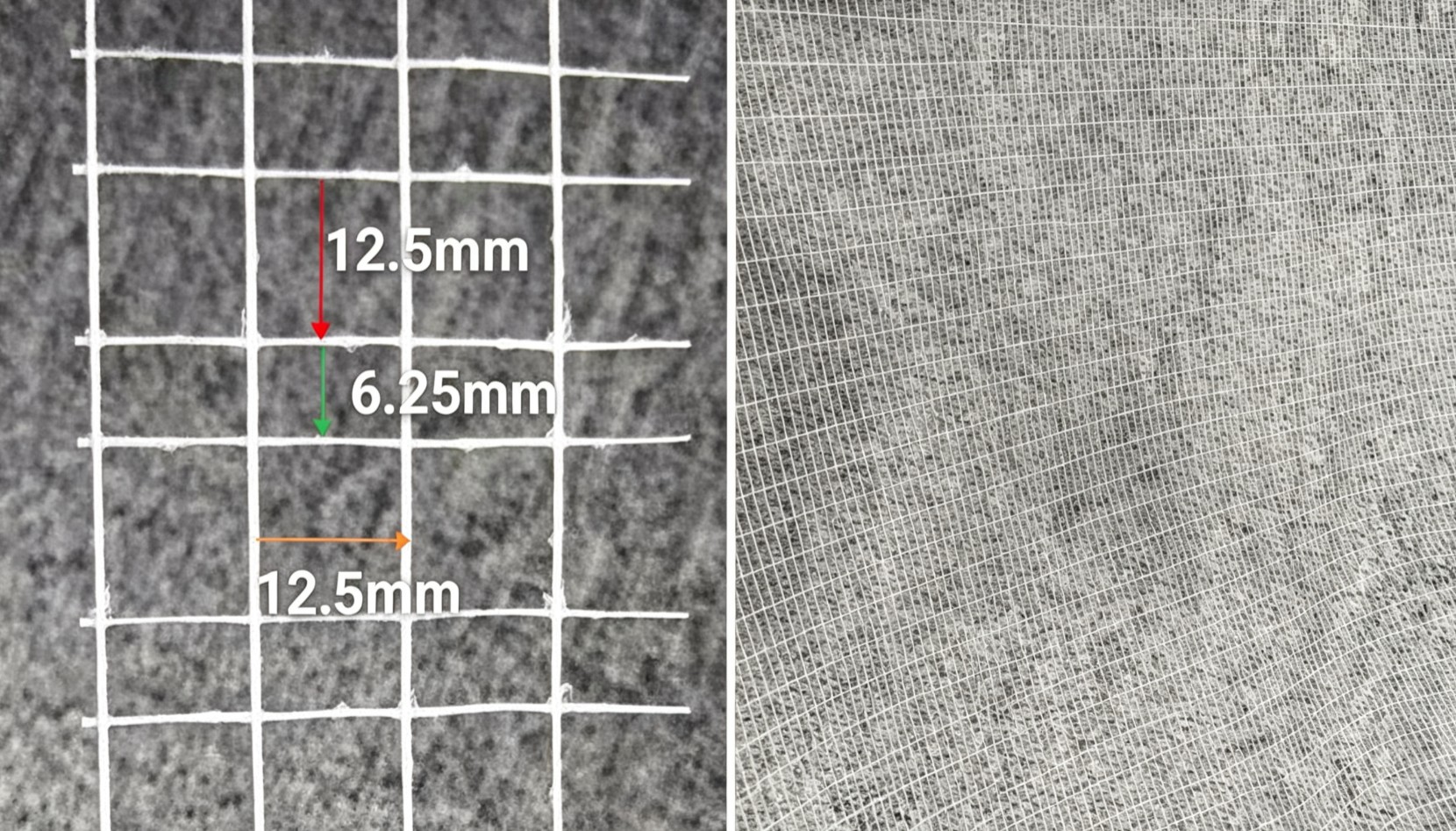
For EIFS fiberglass mesh applications, the technical conversation has moved beyond “does it have a coating” to how much ZrO₂ is in the glass, how uniform is the coating pickup, and how predictable is the mesh geometry roll-to-roll. Industry analysis emphasizes that buyers increasingly look for documented compatibility with specific mortars, adhesives, and finishing layers — not generic certificates. In a market where material cost inflation is cited by 79% of Asia-Pacific respondents as a constraint, the last thing a contractor needs is a mesh that wrinkles during embedment or telegraphs through the finish coat because of uneven coating distribution.
Ruifiber‘s fiberglass mesh range addresses this through controlled manufacturing: alkali-resistant coating formulations matched to specific mortar chemistries, width and mesh size tolerances verified per roll, and traceable production records from yarn intake to finished roll. The company functions as a fiberglass mesh factory in the fullest sense — not a converter buying anonymous stock, but a manufacturer controlling the variables that determine field performance.
Woven Roving and Laminating Roving: The Structural Backbone of Composites and Marine Applications
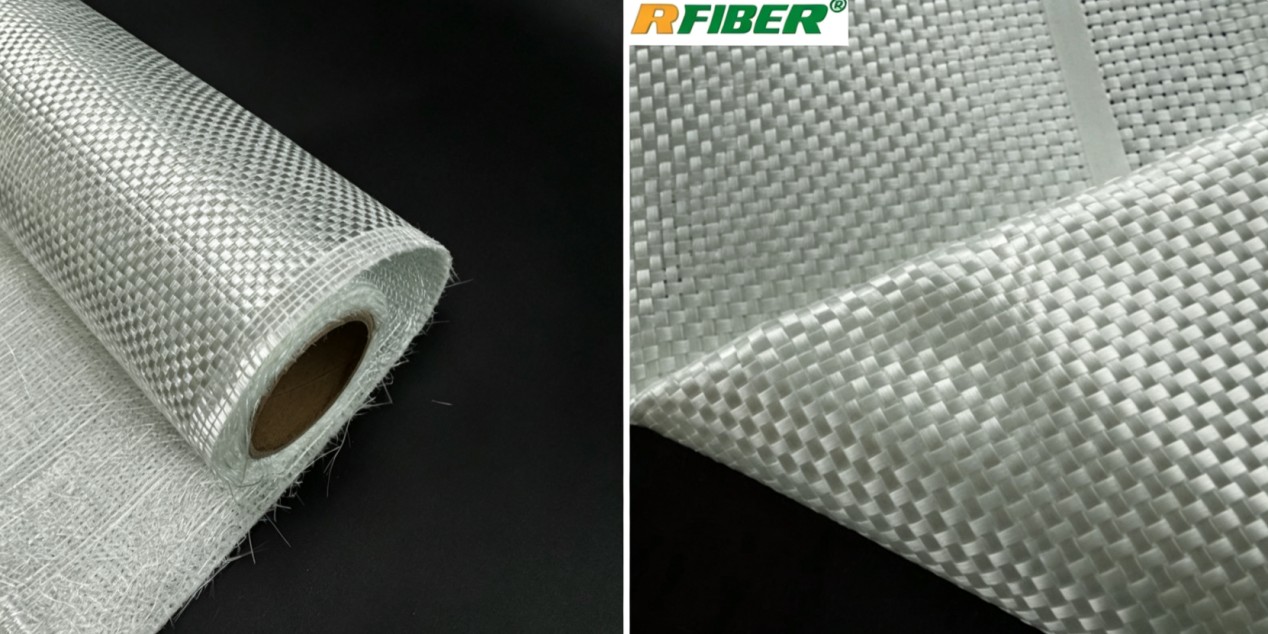
Where fiberglass mesh handles crack control and surface reinforcement, woven roving delivers structural mass and load-bearing capability. Asia-Pacific represents the largest and fastest-growing market for glass fiber composites, driven by infrastructure investment, marine manufacturing, and industrial expansion. Woven roving fabric — particularly heavy-weight constructions — remains the workhorse reinforcement for boat building, marine laminates, and industrial composite panels.
For boat cloth and marine-grade roving applications, the performance criteria are distinct from construction mesh: wet-out speed, drapeability, and laminate consolidation matter as much as raw tensile strength. A heavy woven roving that resists resin penetration or creates air pockets during hand lay-up produces a laminate with hidden voids — defects that only surface under cyclic wave loading or impact. Ruifiber‘s woven roving product line is engineered around what laminators describe as “forgiving behavior”: consistent yarn counts, controlled sizing chemistry for compatibility with polyester, vinyl ester, and epoxy resin systems, and roll-to-roll weight uniformity that allows predictable resin-to-glass ratios.
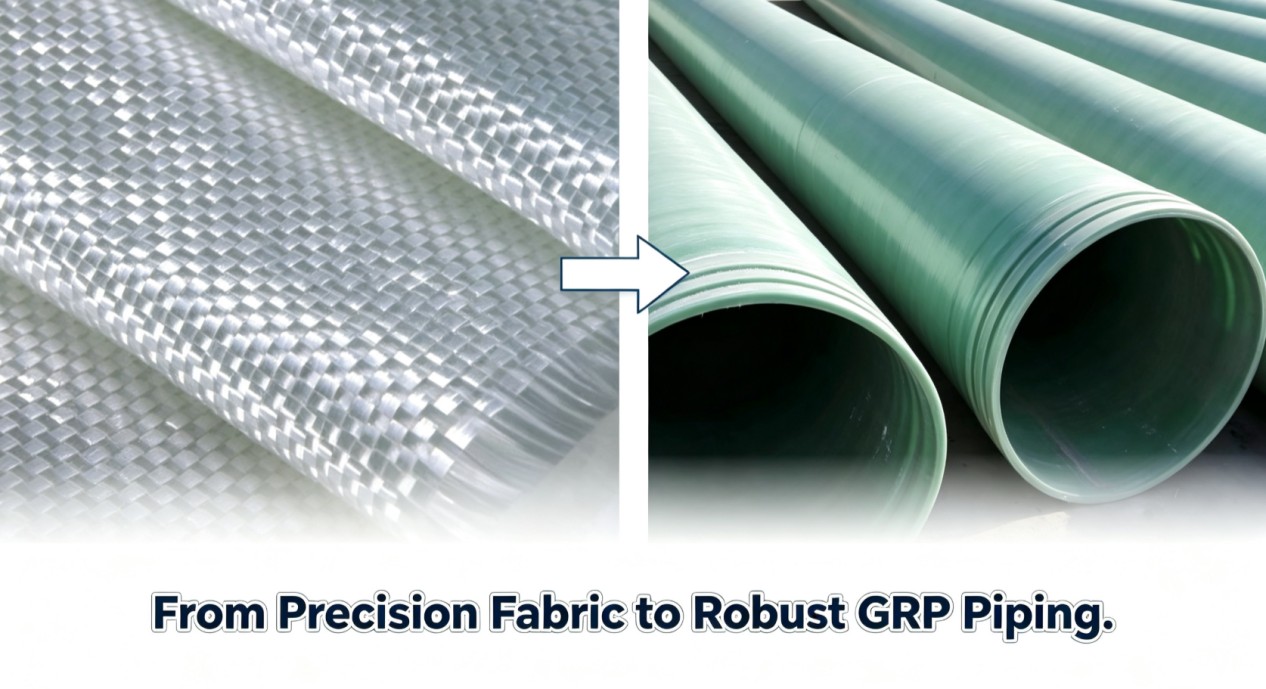
The laminating roving segment serves a parallel function in industrial composites, where open-weave roving and coarse weave fiberglass provide the reinforcement backbone for pultruded profiles, storage tanks, and corrosion-resistant pipe. In these applications, the roving must maintain dimensional stability through elevated-temperature curing while allowing complete fiber wet-out. Ruifiber produces woven fiberglass roving in a range of weights and weave architectures, with process documentation that supports composite manufacturers’ own quality systems.
Fiberglass Mesh for Concrete and Roofing: The Application Engineering Dimension
Fiberglass mesh for concrete and roofing fiberglass mesh represent applications where the mesh must survive the most aggressive installation conditions: abrasion against aggregate, exposure to alkaline pore water, and thermal movement across seasons. Industry analysis increasingly frames competitive advantage around application engineering — not just product specifications, but whether the mesh behaves predictably in the hands of installers.
Consider a concrete slab reinforcement application. The mesh is placed over a prepared subgrade, then covered with poured concrete. If the fiberglass mesh is too stiff, it will not conform to surface irregularities and will create reflective cracking paths. If it is too limp, it will displace during concrete placement. The optimal mesh for fiberglass mesh for concrete applications achieves a tensile retention balance: high enough to bridge cracks, flexible enough to follow substrate contours, and stable enough to resist displacement under the weight of wet concrete.
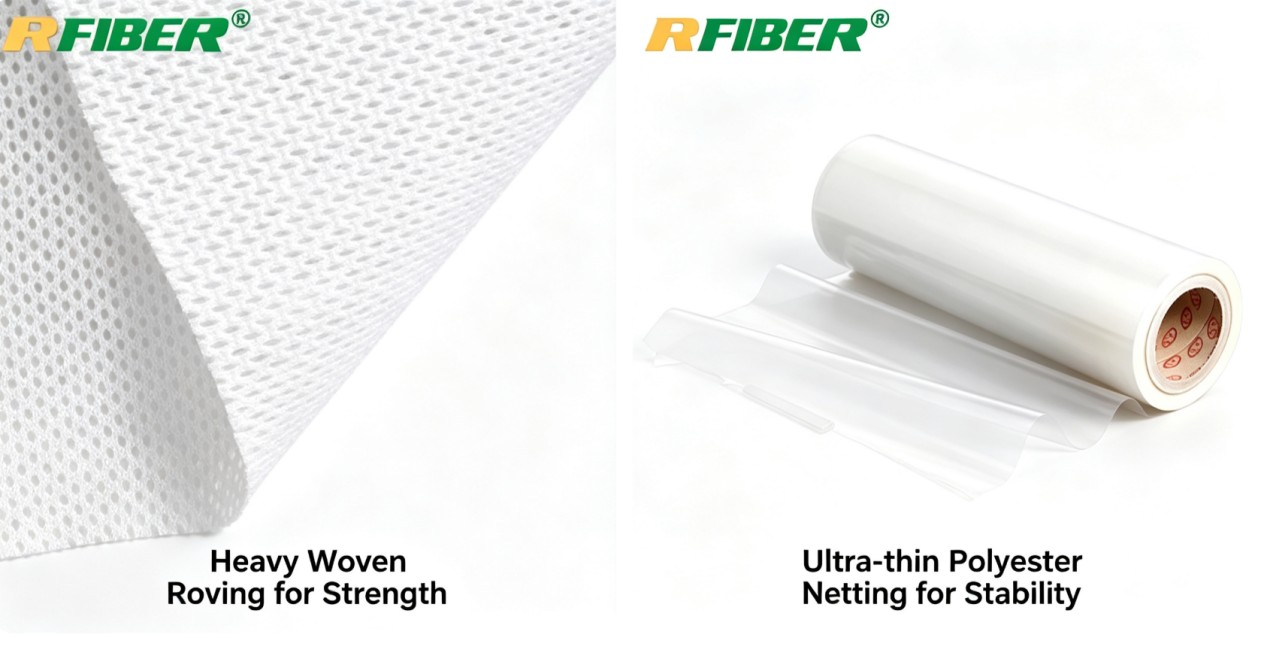
Roofing fiberglass mesh faces a different challenge: resistance to UV degradation during storage and installation, and compatibility with asphalt or modified bitumen membranes. Ruifiber supplies roofing fiberglass mesh with controlled coating formulations that resist UV for the handling window and maintain adhesion to bituminous systems. The company operates as a fiberglass mesh supplier with factory-direct capability — which matters in a market where Chinese manufacturers are competing on quality certification and pricing 15–25% below Western producers for comparable standard grades.
The Factory-Direct Proposition in a Market Rewarding Traceability
The common thread across all applications — EIFS mesh, woven roving, concrete reinforcement — is that buyers are moving away from anonymous supply toward documented performance. Research confirms that traceability, origin records, and accessible test documentation reduce friction in compliance-focused projects and protect brand equity during disputes. In a landscape where 70% of construction organizations report material cost inflation impacts and 30% of projects experienced delays in the past year, reliable supply is not a soft benefit — it is a project necessity.
Shanghai Ruifiber Industry Co., Ltd. operates as a fiberglass mesh manufacturer China-based with woven roving and scrim production capacity. The company’s positioning is straightforward: factory inspection welcome, samples available, technical support from the production team. Its product portfolio serves fiberglass mesh suppliers, EIFS contractors, marine laminators, and composite manufacturers who need documented material origin and predictable specifications.
For buyers navigating the 2026 procurement environment — where cost pressures are building, supply chains remain fragile, and specification discipline is the difference between a successful project and a callback — Ruifiber offers what the market increasingly demands: factory-direct fiberglass mesh and woven roving with traceable process control.
Address
Head office Add: BLDG#26,MAX Technology Park Phase II,Baoshan District,Shanghai China
Factory Add: Shanghai Ruifiber (Fengxian) Industry Park, Fengxian, Xuzhou, China
Lgl_1100@vip.163.com
Ruifibersales2@ruifiber.com
Phone
0086-21-56659615(Sales dept)
0086-18621915640
0086-1561815 6160
Hours
Monday-Friday: 9am to 6pm
Saturday, Sunday: Closed
WANT TO WORK WITH US?
Post time: Oct-08-2026