
Fiberglass Mesh Strength: Surprising Stats and Simple Facts
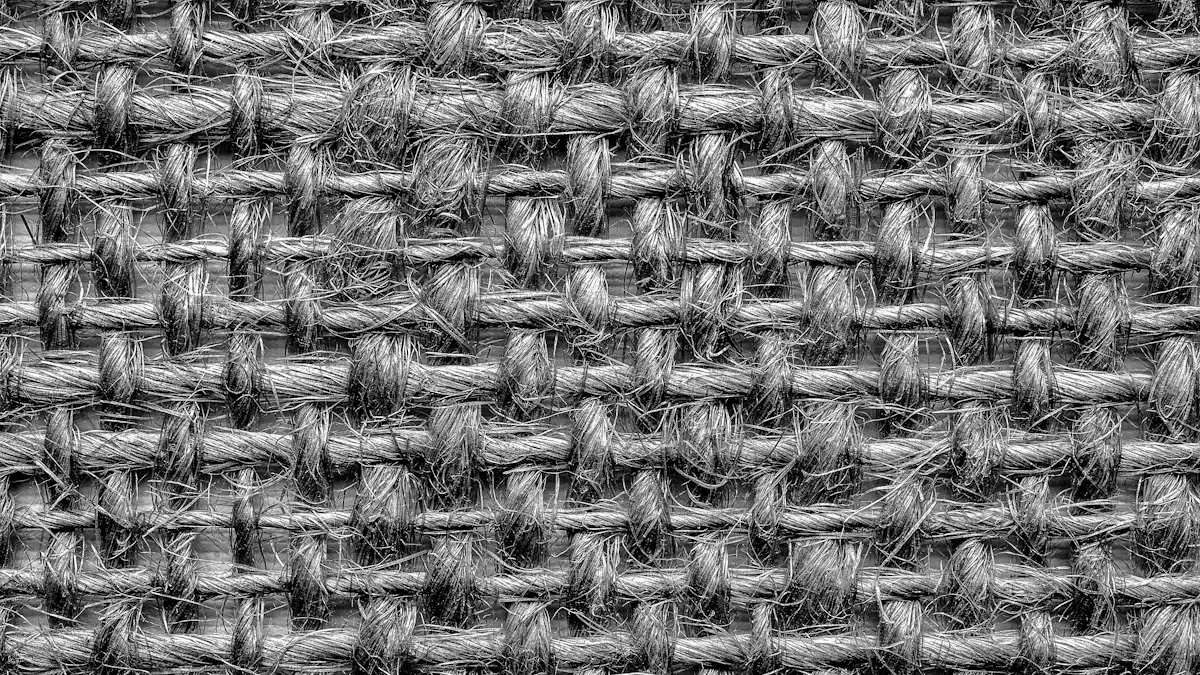
You see fiberglass mesh used in many strong and lightweight products. This woven fabric comes from ultra-thin glass fibers. You can find it in items like fiberglass self adhesive tape, fire blanket, laid scrim, and even metal corner tape.
- The global fiberglass mesh market may reach USD 1.21 billion by 2035, with the industrial segment making up about 65% of use in 2024.
Check out how fiberglass mesh compares to traditional steel mesh:
| Feature | Fiberglass Mesh | Traditional Steel Mesh |
|---|---|---|
| Weight | Lightweight (130 g/m²) | Heavy (3–10 kg/m²) |
| Tensile Strength | High and flexible | Very high and rigid |
Key Takeaways
- Fiberglass mesh is lightweight yet strong, making it ideal for various applications, including construction and repairs.
- This material resists moisture, chemicals, and high temperatures, ensuring durability in tough environments.
- Fiberglass mesh can last over 30 years indoors and 10 to 20 years outdoors, providing long-term value for projects.
- Its flexibility allows for easy cutting and shaping, making it suitable for both small repairs and large construction jobs.
- Using fiberglass mesh can save money on materials and labor due to its high strength-to-weight ratio and low maintenance needs.
What Is Fiberglass Mesh?
Simple Definition
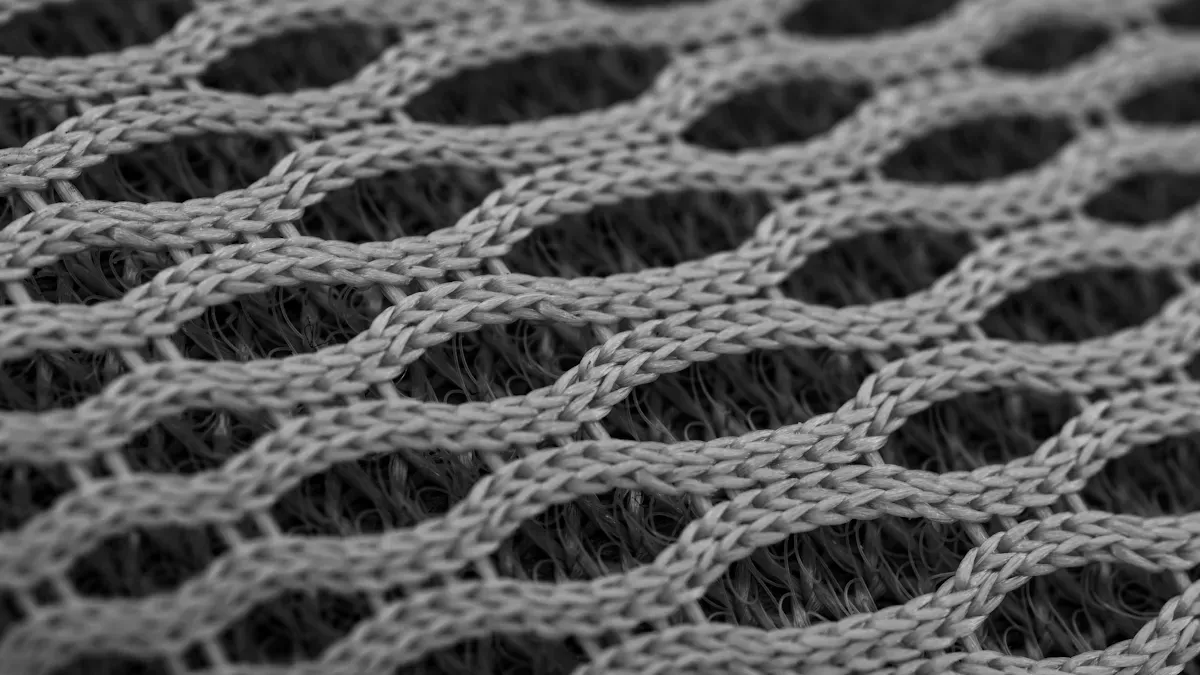
You can think of fiberglass mesh as a strong, woven fabric made from tiny glass fibers. These fibers look almost like threads, but they come from melted glass. You see this mesh in many products because it gives strength without adding much weight. You might find it in wall coverings, tapes, or even fire blankets. When you use fiberglass mesh, you get a material that resists breaking and stretching.
Tip: You can cut fiberglass mesh into many shapes and sizes. This makes it easy to use for different projects.
Main Components
You might wonder what goes into making fiberglass mesh. The process starts with high-quality glass fibers. Factories weave these fibers together using patterns like plain, twill, or satin. This weaving forms the mesh structure. After weaving, workers add special coatings, such as latex or epoxy resin. These coatings protect the mesh and make it last longer. The final steps include drying and cutting the mesh to the right size.
Here is a table that shows the main steps in making fiberglass mesh:
| Manufacturing Process | Description |
|---|---|
| Material preparation | High-quality glass fibers are selected as raw materials, ensuring high modulus and strength. |
| Fiber weaving | Glass fibers are interwoven using methods like plain, twill, and satin weave to form a mesh. |
| Coating treatment | Protective coatings (e.g., latex, epoxy resin) are applied to enhance performance and durability. |
| Post-processing | Involves drying, cutting, and other processes to finalize the fiberglass mesh product. |
The raw materials used in fiberglass mesh also matter. You see a mix of minerals and chemicals that help create strong glass fibers. Some of the main ingredients include silica sand, limestone, soda ash, and borax. These materials melt together to form glass. Factories also add resin to bind the fibers and improve strength.
| Raw Material | Description |
|---|---|
| Limestone | Used as a flux in glass production. |
| Silica Sand | Primary component of glass. |
| Soda Ash | Reduces melting temperature. |
| Borax | Improves glass properties. |
| Magnesite | Adds strength to the glass. |
| Nepheline Syenite | A source of alumina and silica. |
| Feldspar | Acts as a flux in glass. |
| Kaolin Clay | Enhances the glass's workability. |
| Alumina | Improves durability and strength. |
| Fiberglass | Reinforcement material. |
| Resin | Binds the fiberglass together. |
You now know that fiberglass mesh comes from a careful mix of glass fibers, minerals, and resins. This mix gives you a material that stands up to tough jobs and lasts for years.
Key Properties of Fiberglass Mesh
Strength and Mechanical Performance
You can count on fiberglass mesh for its impressive strength. This material stands out because it combines light weight with high mechanical performance. Engineers often use it in composite materials, like Glass Fiber Reinforced Polymers (GFRPs), to reduce mass while keeping structures strong. This is why you see it in airplanes and other advanced products.
When you look at the numbers, the strength becomes clear. Tests show that fiberglass mesh can boost tensile strength by over 250 MPa. It also increases flexural strength by more than 350 MPa. These numbers mean that the mesh helps materials resist pulling and bending forces. You also get better impact strength, which means the material can handle sudden hits or shocks.
- Key mechanical properties of fiberglass mesh:
- Tensile strength: Up to 265 MPa increase
- Flexural strength: Up to 385 MPa increase
- Impact strength: Over 11 Joules improvement
Note: When you combine fiberglass mesh with other materials, like stainless steel wire mesh, you get even stronger products. This makes them perfect for tough jobs in construction and engineering.
Durability and Longevity
You want materials that last a long time. Fiberglass mesh delivers on durability. It resists wear, moisture, and many chemicals. This means you can use it in places where other materials might break down.
Field studies show that fiberglass mesh can last over 30 years indoors. If you use it outside, you can expect it to last 10 to 20 years. In harsh chemical environments, the lifespan can vary, but it usually stays strong. If the mesh faces heavy mechanical stress, you should check it and reinforce it if needed.
| Condition | Average Lifespan |
|---|---|
| Indoor Use | Over 30 years |
| Outdoor Exposure | 10–20 years |
| Chemical Exposure | Generally durable |
| Mechanical Stress | Needs inspection |
Tip: You can make your projects last longer by choosing fiberglass mesh for areas that face moisture, chemicals, or heavy use.
Flexibility and Adaptability
You need materials that can fit many shapes and uses. Fiberglass mesh gives you this flexibility. You can cut it, bend it, or layer it to match your project. This makes it easy to use in walls, ceilings, or repairs.
The mesh does not stretch much before it breaks. This means it holds its shape well, but it is less ductile than some other materials. For example, the elongation at break for fiberglass mesh averages about 24%. This is lower than unreinforced plastics, so the mesh adds stiffness and reduces stretching.
- Why flexibility matters:
- You can shape the mesh for corners, curves, or flat surfaces.
- You can use it in both small repairs and large construction jobs.
- You get a material that adapts to many needs without losing strength.
Callout: Fiberglass mesh helps you build strong, long-lasting, and adaptable structures. You can trust it for many different projects.
Chemical and Temperature Resistance
You need materials that can handle tough environments. Fiberglass mesh stands out because it resists both chemicals and high temperatures. This makes it a smart choice for many projects where other materials might fail.
When you use fiberglass mesh, you get a product that keeps its strength even when exposed to heat. Standard types can handle temperatures up to 540°C (998°F). High-density versions work well up to 538°C (1000°F). Here is a table that shows the maximum temperature limits for different types:
| Type of Fiberglass Mesh | Maximum Temperature (°C) | Maximum Temperature (°F) |
|---|---|---|
| Standard Fiberglass Mesh | 540 | 998 |
| High-Density Fiberglass Mesh | 538 | 1000 |
You also want to know how fiberglass mesh reacts to chemicals. You can trust it in places where acids, alkalis, or solvents might cause problems for other materials. Here are some facts about its chemical resistance:
- Fiberglass mesh keeps its electrical strength even after soaking in 10% hydrochloric acid or sodium hydroxide.
- AR-glass works best in high-pH areas because it contains zirconium oxide.
- Special coatings, like PTFE, help the mesh resist strong acids and solvents.
- E-glass gives good general chemical resistance, but it may wear down in strong alkalis over time.
- AR-glass is made for use in alkaline conditions.
- Fiberglass mesh does not rust or corrode, so moisture and most chemicals do not affect it.
Tip: You can use fiberglass mesh in places with lots of moisture or chemicals. It will not rust or break down like metal mesh.
You now see why fiberglass mesh is a top pick for jobs that need both chemical and temperature resistance. You get a material that stays strong, even in harsh conditions.
Surprising Stats About Fiberglass Mesh
Tensile Strength Numbers
You might find it surprising how strong fiberglass mesh can be. Mesh 120, a common type, shows a tensile strength of 539.19 MPa. This number means the mesh can handle heavy loads before breaking. Even with an average strain of 0.0400 mm/mm, the mesh keeps its shape well. The impact strength for Mesh 120 reaches 54.45 kJ/m². Sometimes, small flaws like fiber pull-out or microcracks can lower this number. Tiny voids or air pockets in the mesh may also reduce its load-bearing power. Still, you get a material that stands up to tough jobs.
- Mesh 120 tensile strength: 539.19 MPa
- Impact strength: 54.45 kJ/m²
- Average strain: 0.0400 mm/mm
Note: Even with minor flaws, fiberglass mesh keeps its strength in most uses.
Weight-to-Strength Ratio
You want materials that are both light and strong. Fiberglass mesh gives you both. It is up to 75% lighter than steel. The strength-to-weight ratio is higher than steel, so you get more strength for less weight. Carbon fiber is even lighter, about 70% less than fiberglass, and it is more than 20% stronger. Here is a table to help you compare:
| Material | Weight Comparison | Strength Comparison |
|---|---|---|
| Fiberglass (FRP) | Up to 75% lighter than steel | Strength-to-weight ratio exceeds steel |
| Carbon Fiber | 70% lighter than fiberglass | More than 20% stronger than fiberglass |
Tip: You can use fiberglass mesh when you need to reduce weight but keep high strength.
Comparison to Other Materials
You get many advantages when you choose fiberglass mesh over traditional materials. It is much lighter than steel, so you can move and install it easily. You do not have to worry about rust or corrosion, which makes it great for wet or chemical-heavy places. You also save money because you need less concrete and spend less on labor. Fiberglass mesh offers a high strength-to-weight ratio, about 75-80% lighter than steel, while still being strong. You can shape it for custom jobs, and it needs little maintenance over time.
- Lightweight and easy to handle
- No rust or corrosion
- Saves money on materials and labor
- High strength-to-weight ratio
- Flexible for many designs
- Low maintenance costs
Callout: Fiberglass mesh gives you a smart, cost-effective, and strong choice for many projects.
Simple Facts About Fiberglass Mesh
Quick Facts on Strength
You can rely on fiberglass mesh for many reasons. Manufacturers highlight several key features that make this material stand out. The mesh shows high mechanical strength, so you can use it for heavy loads. It keeps its shape even when temperatures or humidity change. You do not have to worry about weather damage because it resists UV rays, chemicals, and other environmental factors. The mesh blocks water but lets moisture escape, which helps prevent mold. You can cut and apply it easily, making it a convenient choice for many projects.
Here is a table that sums up these quick facts:
| Characteristic | Description |
|---|---|
| Mechanical strength | Handles heavy loads with high tensile strength. |
| Dimensional stability | Keeps shape under temperature or humidity changes. |
| Weather resistance | Stands up to UV rays, chemicals, and tough environments. |
| Waterproof and breathable | Stops water but lets moisture escape, lowering mold risk. |
| Easy to apply | Lightweight and simple to cut for different uses. |
Tip: You can trust fiberglass mesh to stay strong and stable in many conditions.
Everyday Uses
You see fiberglass mesh in many places every day. Builders use it to reinforce walls and ceilings. You can find it in drywall tape, which helps prevent cracks. People use it for patching holes in plaster or stucco. You might notice it in fire blankets, which protect against heat and flames. It also works well in waterproofing projects, such as sealing roofs or balconies. Artists sometimes use it for sculpture or craft projects because it bends and shapes easily.
- You can use fiberglass mesh for:
- Wall and ceiling reinforcement
- Drywall tape and crack prevention
- Plaster and stucco repairs
- Fire protection blankets
- Waterproofing roofs and balconies
- Arts and crafts
Callout: You can choose fiberglass mesh for both big construction jobs and small repairs at home.
Common Applications of Fiberglass Mesh
Construction and Renovation
You will find fiberglass mesh in many construction and renovation projects. Builders use it for thermal insulation systems, plaster reinforcement, and waterproofing. This material works well in both residential and commercial buildings. E-Glass mesh offers a cost-effective solution for most jobs, while AR-Glass mesh stands up to harsh chemicals in demanding environments. You can see its versatility in the way the market divides by product type, application, and mesh weight. Thermal insulation systems drive much of the demand because they help keep buildings energy efficient.
Here is a table showing the main benefits of using fiberglass mesh in wall and floor reinforcement:
| Benefit | Description |
|---|---|
| Durability | Maintains structural integrity under heavy loads, resisting cracking and fatigue over time. |
| Lightweight | Weighs up to 75% less than steel, easing transportation and installation. |
| Corrosion Resistant | Immune to rust and corrosion, ensuring longevity in harsh environments. |
| Increased Flexibility | Absorbs dynamic stresses and thermal expansion, preventing crack propagation. |
| Easy Installation | Requires no specialized tools, speeding up construction and reducing safety risks. |
Tip: You can use fiberglass mesh to make your construction projects stronger and longer-lasting.
Repairs and Reinforcement
You can rely on fiberglass mesh for many repair and reinforcement tasks. It works well for drywall crack repair, corner reinforcement, and renovation patches. You can also use it for temporary fixes that may need attention later. This mesh stands out because it is strong, flexible, and resists environmental factors. When you compare it to metal mesh, you will notice that fiberglass mesh is lighter and easier to handle. It does not rust, so it keeps its strength over time. In a real housing project, builders found that 130 g fiberglass mesh in cement layers gave better crack resistance than steel mesh.
Here are some common repair scenarios:
- Drywall crack repair
- Corner reinforcement
- Renovation patches
- Temporary fixes
Note: You can trust fiberglass mesh to provide better crack resistance and long-term durability than metal mesh.
Other Practical Uses
You will see fiberglass mesh in many industries beyond construction. Automotive shops use it for body repairs, fixing dents and surface damage. Industrial workers add it to coatings and linings to make surfaces more durable. In geocomposites, it helps control erosion and stabilize soil. Boat builders use it to reinforce hulls and decks, making them last longer. You can also find it in road paving overlays, fireproofing systems, and even artistic sculptures. Military and defense teams use fiberglass mesh in lightweight armor and strong enclosures.
Here is a table showing how its use has expanded:
| Application Area | Specific Uses |
|---|---|
| Construction | Interior wall insulation, external wall reinforcement, roof waterproofing |
| Automotive | Body panels, safety components, fuel economy improvements |
| Marine | Hull and deck reinforcement, preventing delamination |
| Aerospace | Non-structural components, impact resistance, weight savings |
| Renewable Energy | Wind turbine blades, solar panel substrates |
Callout: You can find fiberglass mesh in many modern products, from cars and boats to wind turbines and sculptures.
You have seen that fiberglass mesh combines high strength, durability, and flexibility. Builders and engineers choose it because it resists cracking, stands up to tough environments, and simplifies installation.
- You can use it in construction, repairs, and even advanced projects like fog harvesting.
- Its lightweight design and long lifespan make it a top choice for modern infrastructure.
| Feature | Benefit |
|---|---|
| Strength | Withstands tension and supports structures |
| Durability | Reduces risk of fractures and cracking |
| Versatility | Fits many applications and project needs |
You can count on fiberglass mesh for reliable performance in both home and industrial projects.
FAQ
What makes fiberglass mesh so strong?
You get strength from the woven glass fibers. These fibers resist pulling and stretching. The special coatings add extra durability. You can trust fiberglass mesh to hold up under heavy loads.
Is fiberglass mesh safe to handle?
You can handle fiberglass mesh safely if you wear gloves and a mask. Tiny fibers may irritate your skin or lungs. Always wash your hands after use.
How do you install fiberglass mesh?
You can cut fiberglass mesh with scissors. Place it flat on the surface. Use adhesive or embed it in plaster or mortar. Smooth out any wrinkles for best results.
Can fiberglass mesh rust or rot?
You do not need to worry about rust or rot. Fiberglass mesh does not absorb water. It resists moisture, chemicals, and most weather conditions.
How do you maintain fiberglass mesh?
You do not need much maintenance. Check for damage or wear during regular inspections. Replace any torn or loose sections to keep your project strong.
Address
info@ruifiber.com
ruifibersales2@ruifiber.com
Phone
Sales: 0086-159-6804-7621
Support: 0086-186-2191-5640
Hours
Monday-Friday: 9am to 6pm
Saturday, Sunday: Closed
WANT TO WORK WITH US?
WANT TO WORK WITH US?
Post time: Mar-19-2026