
Fiberglass Mesh vs Metal Lath for Stucco Bases: Choosing by Condition, Not Habit
Ask a mesh supplier and fiberglass wins; ask a lath supplier and steel wins. Both are telling the truth about their own product, which is exactly why the question "which is better for stucco?" never resolves. The useful question is different: what does each reinforcement actually do inside a wall system, and which of those jobs does your project have? A fiberglass mesh and a metal lath are not two grades of the same thing — they reinforce stucco in mechanically different ways, they occupy different positions in the build-up, and on many real walls they end up working side by side.
This article separates the two mechanics, compares them across the six dimensions that matter on site, and then gives a four-factor decision — substrate, coat thickness, curvature, corrosion exposure — that resolves the choice for most stucco and EIFS work, including the two situations contractors ask about most: curved walls and coastal exposure.
Two Reinforcements, Two Mechanics
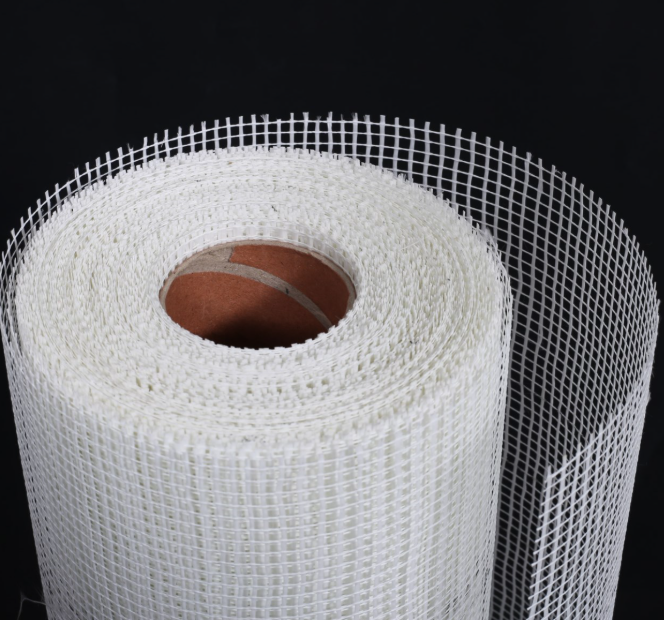
Fiberglass mesh is a woven glass scrim, coated to resist the alkalinity of cement plaster, that gets laid into the wet base coat and troweled in. Once embedded, it does not fasten to the wall and it carries no structural load. Its job is stress distribution: spreading shrinkage and impact stresses across the surface of the coat so that hairline cracks do not get a chance to organize and telegraph through the finish.
Metal lath — the galvanized stucco netting or welded-wire lath used in traditional cement work — works from the other side of the plaster. It is fastened to the framing or substrate and held slightly off it, so the scratch coat flows behind the wire and keys around it mechanically. The lath is what holds the full weight and thickness of cement plaster on the wall; the plaster is built on it, not just reinforced by it.
That is the whole distinction in one sentence: mesh lives inside the coat, lath is what the coat is applied over. Everything else — weight, speed, corrosion, cost — follows from it. When a fiberglass supplier says mesh reinforces the base coat, and a steel supplier says lath is the base, both statements are descriptions of position, not marketing. A supplier who sells steel netting puts it plainly: fiberglass cannot replace wire lath in full-thickness cement stucco, because an unfastened scrim inside the coat cannot hold that mass to the wall.
The reverse limitation is just as real. A fastened lath does an excellent job of anchoring plaster mass but does little to stop the shrinkage cracks that form in the surface of a synthetic or thin coat as it cures — that is surface stress, and surface stress is what embedded mesh is for.
If the distinction is this clean, why does the confusion persist? Partly because the market vocabulary works against it. "Stucco mesh" is used in supplier catalogs for both materials: woven steel stucco netting and fiberglass stucco mesh are different products answering the same search term. Buying conversations inherit the ambiguity — a contractor who asks a general supplier for "stucco mesh" may be quoted either, and price comparisons that look like product comparisons are sometimes comparisons across categories.
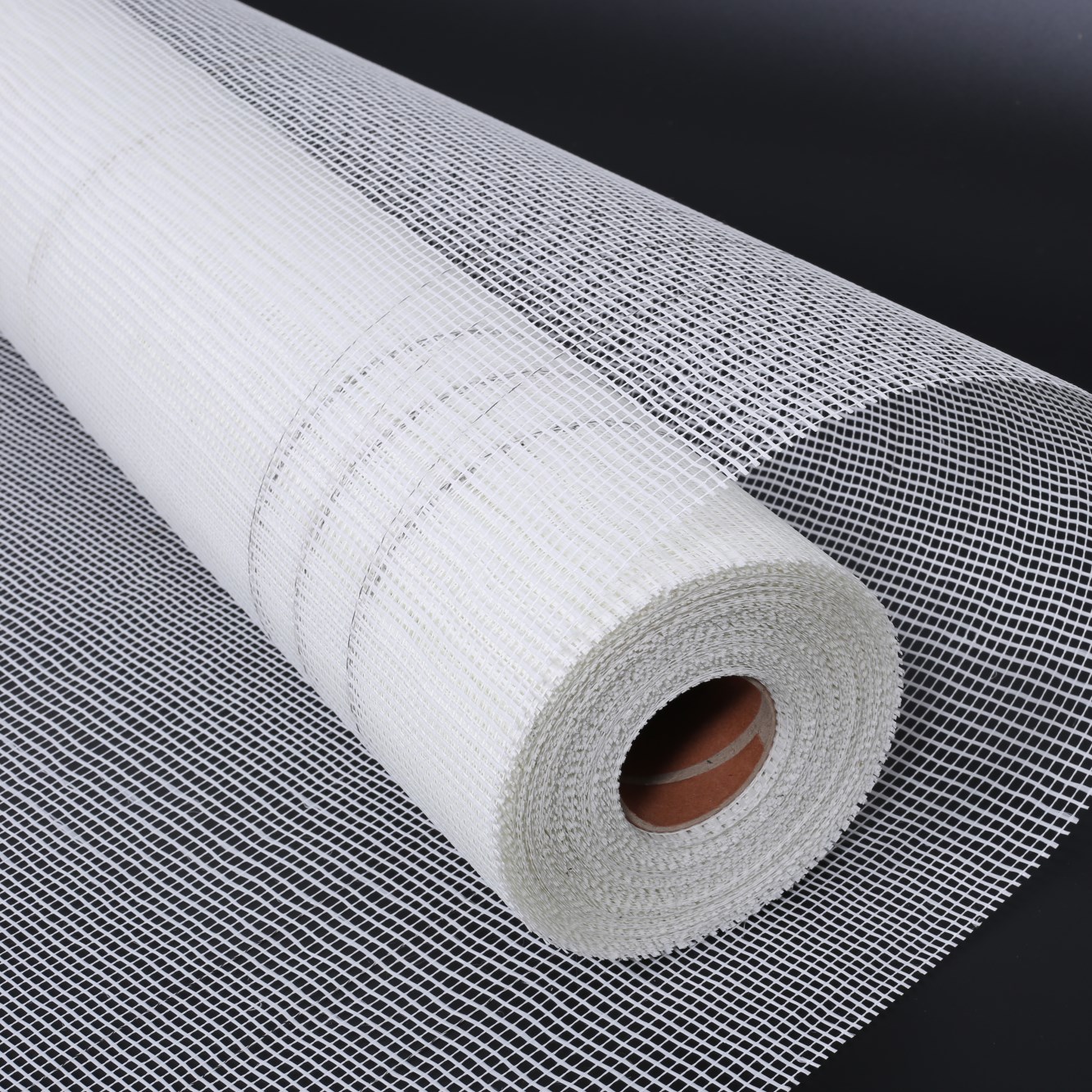
The discipline that prevents this is the same one from the pultrusion world: name the position, not just the material — "alkali-resistant fiberglass mesh for embedding in the base coat" or "galvanized metal lath, self-furring, fastened base" are unambiguous, and they force the quote onto comparable products. The vocabulary is free; the mis-quotes are not.
Which System Uses Which
Once the mechanics are clear, the system split stops being controversial. Industry practice across both camps lines up like this:
| Stucco system | Reinforcement | Where it sits |
|---|---|---|
| Traditional three-coat cement | Galvanized metal lath / stucco netting | Fastened and furred off the wall; plaster keys around it |
| One-coat cement | Metal lath, often with mesh strips at details | Lath fastened; fiberglass embedded at high-stress points |
| EIFS / synthetic stucco | Alkali-resistant fiberglass mesh | Embedded in the base coat over insulation board |
| Crack repair / skim coats | Fiberglass mesh | Embedded in the patch or leveling layer |
The logic behind the table is a chain, and it runs: coat thickness determines mass, mass determines whether the reinforcement must be anchored, and anchoring determines material. A three-coat cement build-up is heavy enough that holding it on is the primary engineering problem — that is lath territory. A synthetic coat over insulation is thin and light, and its problem is cracking, not attachment — that is mesh territory. The one-coat system sits literally in between, which is why it routinely uses both.
Head-to-Head: Six Dimensions That Matter
For the projects where either could plausibly serve, these are the dimensions that actually break the tie. It helps to know why both materials coexist at all. Metal lath has decades of field history in cement stucco and remains the load path for heavy build-ups; fiberglass mesh arrived at scale through the growth of synthetic and insulated systems, where the reinforcement's job was redefined from carrying plaster mass to managing surface stress. Neither displaced the other because the job description split rather than converged. Reading the table below with that history in mind keeps the comparison honest: each column is best-in-class for the job it was actually designed for, and the rows where one side concedes are as informative as the rows where it dominates.
| Dimension | Fiberglass mesh | Metal lath |
|---|---|---|
| Weight | Very light; easy handling and low transport burden | Heavy; more demanding to move and position |
| Installation | Cuts with scissors or a utility knife; embedded with a trowel; no fasteners | Requires fastening, furring and tying; sharp edges to handle |
| Corrosion | Does not rust; no rust stains bleeding through the finish | Steel corrodes at cut edges and fixings unless protected; rust can telegraph |
| Curved surfaces | Conforms to curves and irregular walls naturally | Must be cut and pieced to follow shape |
| Thickness taken | Occupies almost none — it is inside the coat | Lath plus furring takes up measurable build-up |
| Stiffness / impact / load-bearing | Controls shrinkage cracking; not a structural member | Higher stiffness and impact resistance; carries load |
Three of these rows deserve expansion because they drive most real decisions.
Corrosion is the quiet decider. Steel's weakness in stucco is not dramatic failure; it is the slow chemistry at every cut edge, staple hole and weld point, and the rust stain that eventually blooms through an otherwise sound finish. Glass fibers do not rust at all, which removes that entire failure class — the reason mesh is the default in wet and coastal work. On the thermal side, metal is a heat conductor, so a continuous steel layer in the wall build-up creates thermal bridges that a glass layer does not; suppliers of mesh make this point as a selling line, but the underlying physics is not controversial. Treat the magnitude as system-specific rather than quoting a number.
Curvature favors mesh before the first trowelful. A scrim drapes. Quoins, arches, radius corners, the battered walls of older or vernacular buildings — mesh follows them with no more effort than a straight wall, which is why flexible mesh is marketed specifically for complex-shaped facades and renovation work. Lath can be pieced around such shapes, but every joint is a place where the plaster's continuity is interrupted.
Load and impact favor lath, honestly. Where the wall must carry heavy veneers, resist real impact, or support a full-thickness cement build-up, the mechanical key and stiffness of fastened steel is the right tool, and no mesh replaces it. Suppliers on the mesh side concede this readily; the better ones frame their product as crack control within a system, not as a lath substitute.
The Four-Factor Decision: Substrate, Thickness, Curvature, Corrosion
Put the mechanics and the dimensions together and most project decisions resolve into four questions:
| Factor | Points toward fiberglass mesh | Points toward metal lath |
|---|---|---|
| Substrate | Insulation board (EIFS), masonry/concrete block for thin synthetic coats | Wood or steel framing for cement stucco; open structures needing attachment |
| Coat thickness | Thin coats: synthetic finishes, skim coats, one-coat surface work | Full-thickness three-coat cement plaster |
| Curvature | Arches, radius corners, curved or irregular facades, renovation on old buildings | Flat, open walls where piecing is not needed |
| Corrosion exposure | Coastal air, wet climates, humid interiors of the building envelope | Dry inland conditions where steel's risk is manageable |
Two scenarios come up often enough to spell out.
Curved and decorative facades. A restaurant entrance with a radius corner, a themed facade, a restoration job on a building whose walls were never straight — this is mesh's home field. The scrim bends with the substrate, the coat stays continuous, and the reinforcement never fights the geometry. Choosing lath here means cutting, overlapping and fastening small pieces around every curve, and every overlap is a thickness bump that can print through the finish.
Coastal and marine-influenced sites. Salt-laden air attacks steel aggressively, and on a stucco wall the attack happens where you cannot see it — inside the coat, at every cut end. Even well-protected lath is living on its coating in that environment; a glass scrim simply has nothing to oxidize. For coastal stucco and EIFS work, the corrosion row of the table is usually decisive on its own.
A fifth factor sits outside the table because it is about the crew rather than the wall: who is doing the work, and where. Mesh lowers the skill floor of the reinforcement step — it cuts with a utility knife, embeds with a trowel, weighs little enough for one worker to handle a roll, and generates no sharp-edge waste on site. On remote sites, high-rise work where every kilogram rides the hoist, or jobs run by smaller crews, that simplicity compounds: lighter logistics, faster training, fewer laceration incidents, less staging area. None of it changes the engineering case, and none of it should override the structural requirements above — but between two materials that both satisfy the system's specification, the labor row is a legitimate tiebreaker, and it always breaks toward the lighter material.
Using Both on the Same Wall
The choice is not exclusive, and pretending it is leads to worse walls. Industry practice on demanding cement work routinely combines them: metal lath as the fastened base carrying the plaster mass, with fiberglass mesh — strips at openings and stress points, or a full layer — embedded in surface coats for crack control. Steel-side and mesh-side suppliers describe the same combined approach, which is about as close to consensus as this topic gets.
Worth pausing on how unusual that consensus is. Construction material debates rarely end with both manufacturers describing the other's product as the right tool for a defined job, yet that is exactly what the written record here shows: the steel supplier's page refuses to claim full-thickness territory for mesh, and mesh suppliers concede structural territory to lath. When both sides of a supplier debate agree on the boundary, the boundary is real — and it is a more reliable guide than any single vendor's comparison chart.
Where the two meet, detailing matters more than material. Industry-common practice for embedded mesh runs roughly as follows — always confirm against your system supplier's specification:
1.Overlap edges generously — commonly on the order of 100 mm at sheet edges and more at corners, so stress crosses the joint instead of finding it.
2.Add diagonal mesh strips at openings — across the corners of window and door penetrations, where cracks start.
3.Embed fully, never stretch — the mesh must sit inside the coat, not on it; stretched or proud mesh fuzzes the surface and weakens the top coat.
4.Mind the clock on exposure — coated mesh is not designed for weeks of direct sun; cover it if the schedule slips, as UV degrades the polymer coating over time.
One substrate warning applies before any of this: mesh bonds into the coat, so the coat must bond to the wall. Painted or sealed surfaces are bond-breakers and need removal or abrasion first — a mesh layer over a paint film is a crack waiting for weather.
Crack patterns, once the wall is in service, actually let you audit the reinforcement decision. Straight cracks at sheet edges or corners usually trace to overlap detailing — the stress found the joint because the lap was short or the strips were missing at openings. A map of parallel cracks in a large field points at coat shrinkage that the embedded layer was too light or too discontinuous to arrest. Cracks that follow fastener lines, on lath walls, implicate the attachment rather than either reinforcement. Reading failures this way turns the next project's material decision into evidence instead of habit — and it is how a crew builds a defensible preference for one system over the other on their particular substrates.
What to Confirm Before You Order
On the mesh side, an RFQ that gets quoted correctly the first time states five things: weight per unit area (within the commercial 30–600 g/m² range), mesh count, roll width (widths run 500–2400 mm), the coating system, and the feel class — suppliers grade mesh as soft, standard or hard for different embedding behaviors. Ruifiber's fiberglass mesh range publishes that exact framing, which is why it makes a clean template for the inquiry. On quality, ask what the alkali-resistance claim rests on: coating condition on delivery, strength retention after alkali exposure, and batch test reports are the checks that separate a compliant scrim from a white roll of unknown provenance.
On the metal side, the honest summary is standards and system rules: metal lath and its installation are governed by established ASTM standards and by the stucco system's specification, and any lath decision should be read through those documents with your fastener and framing details in hand. Specific gauges, weights and zinc coatings belong to those documents, not to a general article.
Whichever side you buy, one more procurement habit pays for itself: order the reinforcement against the system, not the other way around. Decide the coat system with the finish supplier first — three-coat cement, one-coat, or EIFS — then buy the reinforcement that system names. The reverse order, where a pallet of whichever reinforcement arrived first dictates the build-up, is how walls end up with lath under synthetic coats or bare mesh attempting three-coat work. The materials are rarely the failure; the sequencing is.
Key Takeaways
1.The two materials do different jobs: fiberglass mesh is embedded reinforcement that spreads stress inside the coat; metal lath is a fastened base that carries the plaster.
2.System choice follows coat thickness: full-thickness cement stucco needs lath; synthetic and thin coats use mesh; one-coat work often uses both.
3.Mesh wins the corrosion, curvature, weight and thickness rows; lath wins stiffness, impact and load-bearing — honestly conceded on both sides.
4.Deciding by substrate, thickness, curvature and corrosion exposure resolves most walls; coastal and curved projects usually answer themselves.
5.Combined systems are mainstream practice, and their detailing — overlaps, opening strips, full embedding — matters more than the material choice itself.
Reinforcing a thin coat, an EIFS facade or a curved wall? Browse Ruifiber's fiberglass mesh — alkali-resistant, leno-woven, in weights from 30 to 600 g/m² and widths to 2400 mm — or see the full product line to spec mesh, mat and tape in one RFQ.

Address
BLDG#26,MAX Technology Park Phase II,Baoshan District,Shanghai China
Phone
0086-21-56976143
0086-18621915640
021-56655615(Domestic)
13061721501
Hours
24-hour service
Shanghai Ruifiber Industry Co., Ltd.
Sales Office Address
Shanghai Ruifiber (Fengxian) Industry Park, Fengxian, Xuzhou, China
Tel:+86-21-56976143 021-56655615(Domestic) +86-18621915640 13061721501
Fax: +86-21-5697 5453
Web site: www.rfiber-laidscrim.com
Online Shops: https://ruifiber.en.alibaba.com (International) https://ruifiber.1688.com(China)
Shanghai Ruifiber (Fengxian) Industry Park

Shanghai Ruifiber (Fengxian) Industry Park
Address: Fengxian Electric vehicle Industrial Park accessories Park, Xuzhou, Jiangsu, China
Want to work with us?
Post time: Nov-12-2026