
Fiberglass Surface Veil: What It Does and How to Pick the Right GSM Weight for FRP Projects
If you have ever been told that a surface veil is "optional" — or, on the other hand, that it will transform the strength of your laminate — both statements miss what this thin nonwoven layer is actually for. A fiberglass surface veil (also sold as surface tissue or surfacing mat) is a functional layer, not a reinforcement layer. It does three specific jobs at the surface of an FRP part, it does none of the load-carrying work of a chopped strand mat or woven roving, and knowing which job you need is what tells you which weight and which product series to order. This guide walks through those jobs, the weight ranges involved, and the questions to answer before you place an RFQ.
Fiberglass Surface Veil: What It Does and How to Pick the Right Weight
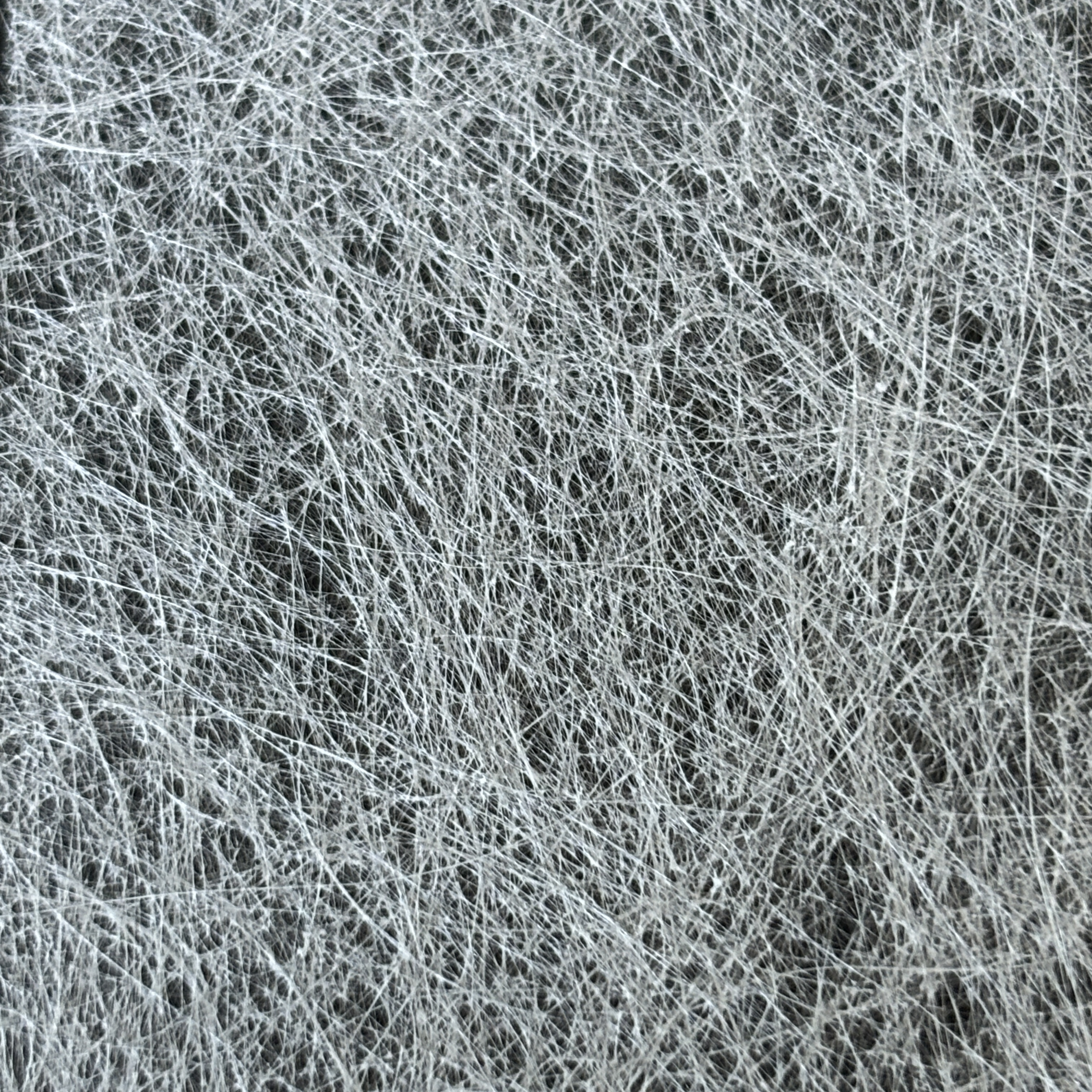
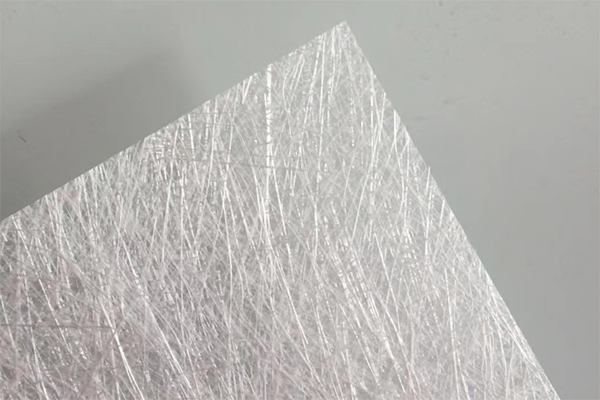
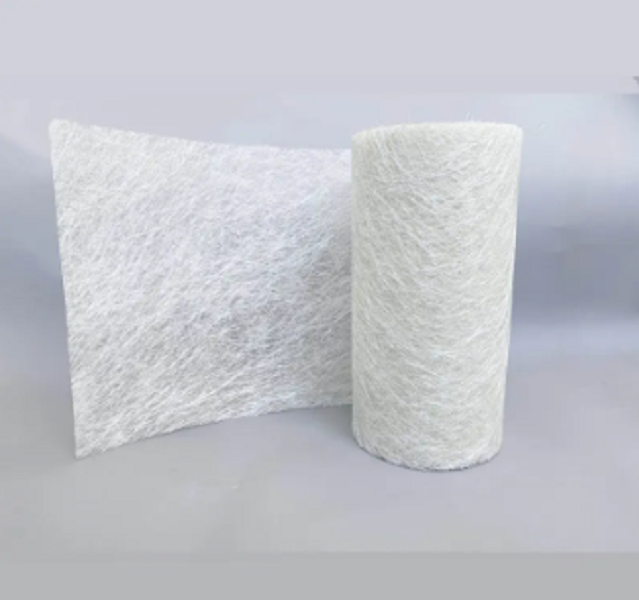
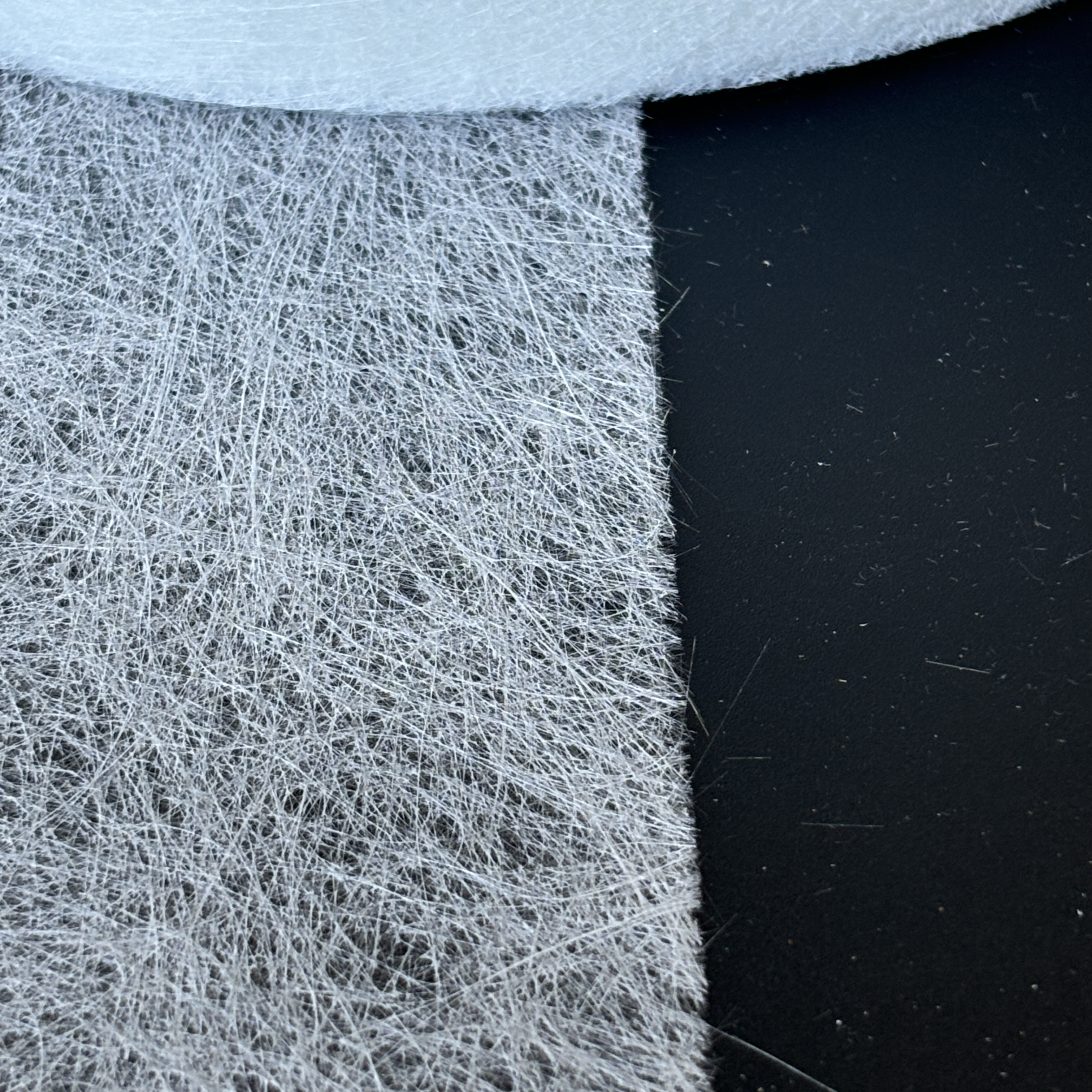
A surface veil is a mat of very fine glass fibers — Ruifiber's are drawn at 3.5–6 microns — held in a light binder, weighing between 20 and 90 g/m². That is dramatically lighter than the chopped strand mat and woven layers beneath it, and that lightness is the point: it is not there to add strength, it is there to control what the surface of your part looks like and how it behaves. Three jobs cover nearly every use.
Job 1: hide the reinforcement texture. Coarse fibers from the layers below tend to "print through" a gel coat or topcoat, leaving a faint woven or matted pattern on the finished surface. A veil layer saturates with resin and forms a thin, fiber-rich, resin-rich stratum that masks that texture, so the finished face reads smooth and consistent. When this job is skipped or the veil is too light for the texture beneath, you see it: ghost patterns in the gel coat after sanding or weathering.
Job 2: support a corrosion barrier. In tanks, pipes and linings, the corrosion resistance of the part does not come from the veil itself — it comes from the resin system. What the veil does is carry and support a resin-rich inner liner: the fine fibers hold an unusually high fraction of resin at the surface, giving the chemical barrier layer the thickness and integrity it needs. The practical resistance profile is decided by the resin you pair with it. When this job is done poorly, blistering and early liner breakdown at the chemical face are the typical symptoms.
Job 3: stabilize production. On pultrusion lines and in repeated molding work, a veil on the outer surface gives the process a consistent, predictable surface to work against: it reduces exposed structural fibers on pultruded profiles, and it makes surface quality repeatable from batch to batch rather than dependent on how the last operator laid the mat. When production surfacing is inconsistent, the symptom is variation between parts that were molded identically.
What it does NOT do
Two clarifications save buyers real money, because both misconceptions lead to wrong purchases.
It does not carry structural load. A 30 g/m² veil contributes essentially nothing to laminate stiffness or strength; the structure comes from the chopped and woven layers. In our own product listing we describe a surface veil as contributing to surface quality, corrosion protection and the durability of the finished part — read that as contribution to the durability of the surface, not as structural reinforcement. If a laminate needs strength, the answer is more or better-placed CSM and woven roving, not a heavier veil. (If you are deciding between those structural layers, see our guide to chopped strand mat vs woven roving.)
It does not make the laminate chemical-resistant. This is the most common over-promise. The veil supports the resin-rich layer where chemical resistance lives; the actual resistance to your specific chemical, at your specific temperature, is a property of the resin system and the overall design. A veil specified correctly still fails in service if the resin behind it is wrong for the media.
There is also a legitimate case for skipping it. Where a face is never seen, never wiped, and carries no chemical media — the back of a panel, an internal flange, a hidden structural rib — the veil adds material cost and a lay-up step without adding anything the part needs. The failure mode is not using a veil; it is using one by habit on faces where none of its three jobs apply, or omitting it on a face where one of them does. Audit each face of the part against the three jobs above and let that decide.
Veil vs chopped strand mat
Because both are random-fiber mats, the two get confused. The difference is weight and role:
| Surface veil | Chopped strand mat | |
| Weight | 20–90 g/m² | 100–900 g/m² |
| Fiber fineness | very fine (3.5–6 μm in Ruifiber's series) | chopped strands |
| Role | surface function: smoothness, liner support, process stability | bulk and reinforcement distribution |
| Position | outermost face(s), often against the mold or the media | core of the laminate |
Terminology note: suppliers use "surface veil", "surface tissue" and "surfacing mat" loosely for the same kind of product. Compare by structure and weight, not by name.
The two products are complements, not alternatives: a typical corrosion liner stacks a gel coat, then a veil, then CSM plies — the veil provides the surface function while the CSM builds thickness and strength.
Picking the weight
Ruifiber's surface veil range runs from 20 to 90 g/m², in series configured for hand lay-up, filament winding and pultrusion. Within that range, industry practice groups weights by use like this (this is common practice across suppliers, not a Ruifiber-specific datasheet — confirm final selection with your supplier):
| Weight band | Typical character | Fits when |
| ~20 g/m² | lightest, most conformable | complex or tight-curvature molds where the veil must follow the shape |
| ~30 g/m² | general-purpose middle band | most cosmetic surfaces and standard liner work; the common starting point |
| ~50 g/m² and up | thicker resin-rich layer | heavier chemical service faces and parts needing a more substantial protective layer |
Three signals push you one band up: aggressive chemical media on the working face, a coarse reinforcement texture underneath that a light veil will not mask, and flat or open surfaces where conformability does not matter. Two pull you down: tight radii and mold detail, and cosmetic surfaces where you want minimum fiber presence at the face.
One practical note on handling: lighter weights are delicate. A 20 g/m² veil tears far more easily during cutting and placement than a 50 g/m² layer, so shops new to veils sometimes order heavy "to be safe" and then find the heavier layer is harder to conform. If your team is handling the material for the first time, it is worth ordering a small quantity of two adjacent weights and running them on a test panel before committing a full order.
Picking by process: hand lay-up, winding, pultrusion
This is where a supplier's product series matters more than a generic datasheet. Ruifiber splits its surface veil into three series to match the three processes most buyers use:
|
Series |
Made for |
What the veil is doing there |
| Hand lay-up | contact molding against a mold surface | acts as the skin over the gel coat, smoothing texture and building the liner |
| Filament winding | cylindrical parts — pipes, tanks, vessels | wraps as part of the liner sequence on the media-facing surface |
| Pultrusion | continuous profiles | wrapped around the profile before the die; cures into a smoother outer skin with fewer exposed structural fibers — common on angles, channels, rods, ladder components |
A note on the polyester veil option: Ruifiber also offers a polyester version in its veil combo stitch mat line; the fiberglass version is positioned for applications demanding higher flame retardancy and heat resistance than the polyester variant. For pure surface-veil purchases, glass is the default; ask about polyester only if your application specifically calls for it.
What to confirm before you order
A surface veil RFQ that gets one clean quote instead of three rounds of clarification contains five fields:
1.Laminate role — cosmetic face, corrosion liner, weathering face, or process stabilizer. This drives everything else.
2.Weight and width — e.g. 30 g/m², 1,000 mm rolls. Give a range and a tolerance expectation rather than a single number if you are flexible.
3.Binder compatibility with your resin — the binder must dissolve correctly in your resin system (polyester, vinyl ester, epoxy). Tell the supplier the resin; ask them to match the binder.
4.Process — hand lay-up, winding or pultrusion, so you are quoted the right series.
5.Glass chemistry and acceptance testing — ask what glass type the veil is drawn from and what incoming tests you can specify (weight per area, binder solubility).
FAQ
Is a surface veil structural?
No. It contributes to the durability and quality of the surface, but structural strength comes from the chopped and woven reinforcement layers in the laminate.
Does a surface veil make my laminate chemical-resistant?
No — chemical resistance is a property of the resin system and the overall design. The veil supports a resin-rich liner layer where that resistance is realized.
Glass or polyester veil?
For most surface-veil applications glass is the default, and Ruifiber positions its fiberglass veil version for higher flame retardancy and heat resistance than the polyester variant in its combo stitch mat line. Specify polyester only where your application calls for it.
Choose your veil with the process in mind
The fastest way to a correct surface veil specification is to name the process and the role first — then the weight and width follow. Browse Ruifiber's fiberglass reinforcement products to see the hand lay-up, filament winding and pultrusion veil series, or send an RFQ with the five fields above and we will come back with a matched series.
Address
BLDG#26,MAX Technology Park Phase II,Baoshan District,Shanghai China
Phone
0086-21-56976143
0086-18621915640
021-56655615(Domestic)
13061721501
Hours
24-hour service
Shanghai Ruifiber Industry Co., Ltd.
Sales Office Address
Shanghai Ruifiber (Fengxian) Industry Park, Fengxian, Xuzhou, China
Tel:+86-21-56976143 021-56655615(Domestic) +86-18621915640 13061721501
Fax: +86-21-5697 5453
Web site: www.rfiber-laidscrim.com
Online Shops: https://ruifiber.en.alibaba.com (International) https://ruifiber.1688.com(China)
Shanghai Ruifiber (Fengxian) Industry Park

Shanghai Ruifiber (Fengxian) Industry Park
Address: Fengxian Electric vehicle Industrial Park accessories Park, Xuzhou, Jiangsu, China
Want to work with us?
Post time: Oct-28-2026