
As Climate Extremes and Infrastructure Renewal Collide, Is Your Fiberglass Mesh Just a Commodity Roll—or the Reason Your Façade, Roof, and Marine Laminate Actually Survive?
From back-to-back hurricane seasons in the Atlantic basin to record-breaking heatwaves that pushed building envelopes across Europe and North America into sustained thermal shock, the construction industry has stopped debating whetherreinforcement matters and started arguing about which source you can trust. When an EIFS elevation debonds, when a rooftop membrane tears at a corner, or when a thin concrete overlay spalls after one harsh winter, the root cause almost never lies in the "main" material. It hides in the invisible layer: the Alkali Resistant Fiberglass Mesh inside the base coat, the Wall Corner Tape / Corner Tape that should have held the termination, the Fiberglass Mesh Tape For Waterproofing bridging a penetration, or the Woven Fiberglass Roving forming the skeleton of a composite structure. And that invisible layer is exactly where too many projects still make the most expensive mistake—treating Fiberglass Mesh as a price-per-square-meter line item instead of engineered cloth.
Enter RFIBER® (Shanghai Ruifiber Industry Co., Ltd.), operating globally under its GADTEX / RFIBER brand architecture. Unlike a pure trading intermediary, RFIBER runs as an integrated Fiberglass Mesh Factory and application-driven supplier: yarn qualification → weaving/laid-scrim processing → coating & sizing → slitting → QC → export packing, all under one management system. That is why specifiers searching Fiberglass Mesh China, China Fiberglass Mesh, Fiberglass Mesh In China, Fiberglass Mesh Supplier China, and Fiberglass Mesh Manufacturers China are increasingly landing on RFIBER—not because the logo is loud, but because the accountability chain is short: we make it, we test it, we ship it.
When the Corner Holds—or Fails—the Whole System Is Judged
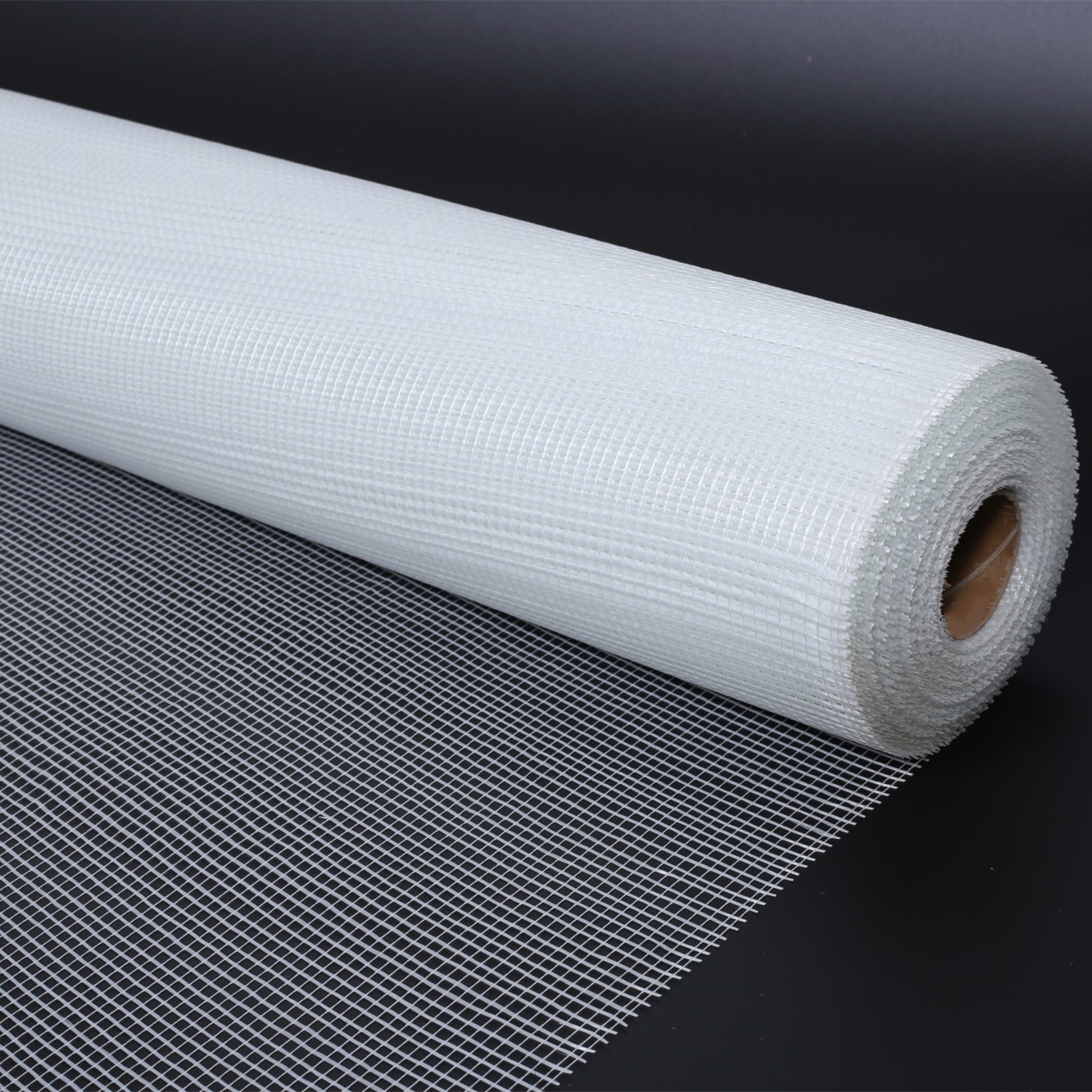
Global energy-retrofit programs have turned building envelopes into active climate infrastructure. Wrapping older housing stock in continuous insulation means EIFS (Exterior Insulation and Finish Systems) are being deployed at unprecedented scale. The problem? The base coat is not decorative. It is a stress-distributing membrane that must survive alkaline pore solution, UV exposure during construction, and years of thermal cycling. The only reason a thin cementitious layer doesn't crack and delaminate is the Eifs Fiberglass Mesh embedded inside it—and that mesh only works if it is genuinelyalkali-resistant and mechanically anchored at the junctions.
RFIBER's answer to this is not "a mesh" but a documented AR-system: zirconia-bearing AR-glass chemistry where required, polymer coating systems engineered for base-coat adhesion, and mesh geometries (commonly 4×4 mm, 5×5 mm, 5×6 mm, 10×10 mm equivalents) matched to impact zones and system thicknesses. For specifiers scanning Fiberglass Mesh Manufacturer lists, the difference between a true Fiberglass Mesh Manufacturers grade and a generic "fiberglass cloth" is simple: the former can show you tensile data, alkali-resistance evidence, and node-bond integrity; the latter can show you a nice photo.
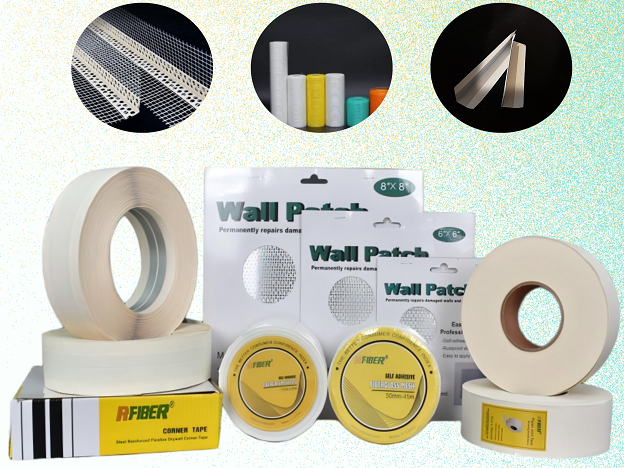
And then there are the corners. Wall Corner Tape / Corner Tape is where wind suction, thermal movement, and construction impact converge at 90°. RFIBER's corner solutions integrate Alkali Resistant Fiberglass Mesh wings into pre-formed profiles so the overlap with field mesh is structural, not cosmetic. Because in envelopes, the corner isn't trim. It's a load path.
Concrete Overlays & Repairs: Fiberglass Mesh For Concrete as a Crack-Control Strategy That Pays for Itself
Municipalities and DOTs are under pressure to reopen lanes faster and keep them open longer. That forces more thin-bonded overlays, partial-depth repairs, and shotcrete—less full-depth replacement. Fiberglass Mesh For Concrete (specifically Alkali Resistant Fiberglass Mesh) earns its keep by bridging micro-cracks before they become through-cracks, placed in the upper third of an overlay or just beneath a repair face.
Fresh concrete lives at pH 12–13; unprotected E-glass degrades. RFIBER's AR mesh programs are built around documented chemistry and coating systems that protect fibers while bonding into cementitious matrices. When engineers type Fiberglass Mesh into a specification, the question should not be "who is cheapest"—it should be "who can prove batch stability so my overlay doesn't become a case study in premature cracking." That is why RFIBER positions itself as a Fiberglass Mesh Factory, not a reseller: every jumbo roll is traceable to process parameters, not just a warehouse pick.
Waterproofing Under Stress: Fiberglass Mesh Tape For Waterproofing & the Roofing Reality Check
Extreme rainfall intensity is rewriting drainage design. Parapet toes, wall-to-roof transitions, and balcony pans are the front line—and Fiberglass Mesh Tape For Waterproofing / Self Adhesive Fiberglass Mesh Tape are what keep those front lines from turning into callbacks. A membrane can be perfect; if the tape at the termination fails, water wins.
RFIBER supplies Roofing Fiberglass Mesh systems for torch-applied and self-adhered membranes, and mesh-reinforced tapes sized for bituminous, TPO/EPDM transition zones, and concrete/metal substrates. For import buyers evaluating Fiberglass Mesh Suppliers, Fiberglass Mesh Supplier China, and broader Fiberglass Mesh Suppliers lists, the differentiator is not "lowest quote per pallet" but: does the mesh elongate out of tolerance under load? does the adhesive mass stay balanced so rolls don't telescope? is the node-bond strong enough to survive folding around a drip edge? Those are factory disciplines (calender pressure, binder crosslink, width tolerance), not purchasing tricks.
Marine Composites: When Roving Isthe Structure—Boat Cloth, Marine-Grade Roving & the Cost of "Cheap"
Step off the jobsite and onto a boat ramp, and the vocabulary changes to Woven Roving, Roving Fabric, Heavy Woven Roving, Woven Fiberglass Roving, Coarse Weave Fiberglass, Open-Weave Roving, Boat Cloth, Marine-Grade Roving, and Laminating Roving. Here the textile isthe skeleton. Crimp too high → compressive strength drops and resin-rich crack initiators appear. Tow alignment drifting → laminate develops soft axes. Sizing mismatched → wet-out looks fine, bond isn't.
RFIBER/Xuzhou production runs looms with tension control and inline inspection, keeping Bulk Fabric roll geometry tight: 300–1200 g/m² families, E-glass/ECR options, sizing families for polyester/vinyl ester/epoxy. Coarse Weave Fiberglass and Open-Weave Roving are supported for thick laminates and core-bonding where permeability and rapid resin flow matter. For boatbuilders and FRP molders searching Fiberglass Mesh Manufacturers who can talk crimp, roving alignment, and laminate homogeneity—not just MOQ—RFIBER replies with process data, not slogans.
Why "Fiberglass Mesh Manufacturers China" Searches Always End at the Same Question: Who Actually Owns the Line?
Type Fiberglass Mesh Factory, Fiberglass Mesh Supplier, Fiberglass Mesh Manufacturer, Fiberglass Mesh Manufacturers China, Fiberglass Mesh Manufacturers, China Fiberglass Mesh, Fiberglass Mesh Suppliers, Fiberglass Mesh Supplier China, Fiberglass Mesh In China, and Scrim into a search engine, and the pattern is obvious: buying teams aren't browsing—they're risk-managing. They want:
- 1.Proof, not promises: tensile/elongation/node-bond/alkali protocols tied to productiondata.
- 2.Customization: mesh geometry, coating chemistry, width (down to narrow conversion slices, up to jumbo formats), and roll length stability.
- 3.Continuity: one quality system covering Eifs Fiberglass Mesh, Alkali Resistant Fiberglass Mesh, Fiberglass Mesh For Concrete, Wall Corner Tape, Fiberglass Mesh Tape For Waterproofing,
- 4.Roofing Fiberglass Mesh, and yes—Woven Roving lines, so multi-material projects don't become three incompatible vendors.
RFIBER's integrated model—Xuzhou plant + Shanghai global office—delivers exactly that: standard & custom meshes from 3×3 mm to 25×25 mm; E-glass/AR-glass/C-glass/polyester/hybrid; acrylic/SBR/PVOH and custom binders; rolls up to 50,000 m; and OEM/private-label services for distributors who need their own brand in-market.
Conclusion — The Mesh Is the Thing You Forget Once, and Remember Forever When It Fails
Buildings, roofs, and boats all share one truth: the most visible materials get the budget; the invisible ones decide the lawsuit. Whether the specification calls for Eifs Fiberglass Mesh, Alkali Resistant Fiberglass Mesh, Wall Corner Tape, Fiberglass Mesh Tape For Waterproofing, Self Adhesive Fiberglass Mesh Tape, Fiberglass Mesh For Concrete, Roofing Fiberglass Mesh, Woven Roving, Boat Cloth, or Marine-Grade Roving, the only safe assumption is that the environment willtest the mesh. The only safe sourcing strategy is a Fiberglass Mesh Factory that can prove it.
RFIBER (GADTEX) invites engineers, specifiers, and procurement professionals to skip the catalog game and start a technical conversation. Bring your drawings, your field failures, or your "almost worked" samples. We'll show you what happens when Scrim, Corner Tape, and Fiberglass Mesh are built like engineering—not like a roll good.
Contact RFIBER® (Shanghai Ruifiber Industry Co., Ltd. — GADTEX Division):
Email: info@ruifiber.com | Tel: 0086-18621915640
Address
Head office Add: BLDG#26,MAX Technology Park Phase II,Baoshan District,Shanghai China
Factory Add: Shanghai Ruifiber (Fengxian) Industry Park, Fengxian, Xuzhou, China
info@ruifiber.com
ruifibersales2@ruifiber.com
Phone
Sales: 0086-159-6804-7621
Support: 0086-186-2191-5640
Hours
Monday-Friday: 9am to 6pm
Saturday, Sunday: Closed
WANT TO WORK WITH US?
Post time: Jun-22-2026