
Fiberglass Mesh for Marble and Stone Reinforcement: How to Choose the Right Mesh
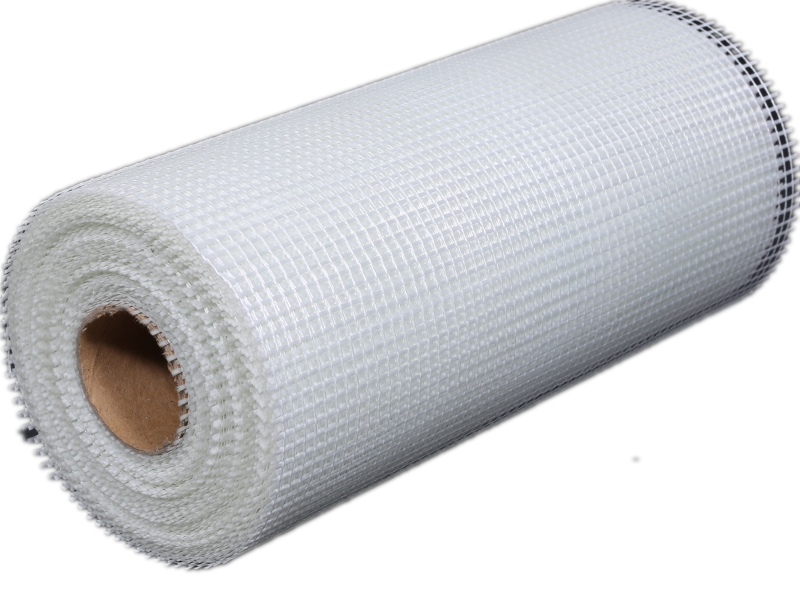
Fiberglass mesh for marble and stone reinforcement helps improve crack resistance, handling strength, and dimensional stability in stone-processing and building applications. The right mesh is not selected by color or price alone. Buyers should compare the finished weight, mesh opening, tensile strength, weave, coating, roll width, and compatibility with the adhesive or cementitious system used in production.
Ruifiber’s flexible fiberglass mesh product information describes a woven C-glass or E-glass mesh coated with acrylic acid copolymer liquid. The listed applications include stone reinforcement, EIFS and wall reinforcement, roof waterproofing, and mesh for EPS or wall corners. Available options are described as soft, standard, or hard mesh, with listed widths from 500 mm to 2,400 mm and finished weights from 30 g/m² to 600 g/m² for the product range.
This guide explains how to specify fiberglass mesh for marble backing, stone reinforcement, EIFS, and related construction products. It is written for stone processors, building-material manufacturers, importers, distributors, and purchasing teams that need a practical basis for comparing samples and factory quotations.

Why fiberglass mesh is used behind marble and stone
Natural stone and engineered stone can be strong in compression but vulnerable to cracking, edge damage, impact, and handling stress. A reinforcement layer can help stabilize the back of a slab, tile, panel, or composite construction. Fiberglass mesh is commonly embedded or bonded into a backing system so the finished material can be handled and processed with lower risk of crack propagation.
Reduce breakage during cutting, transport, installation, or panel conversion. For EIFS, it reinforces the base coat to resist cracking.
Describe the application, backing material, and target weight instead of just asking for “fiberglass mesh”.
Fiberglass mesh and laid scrim are not identical
Fiberglass mesh and laid scrim can both be used as reinforcement, but their structures and processing behavior differ. Woven fiberglass mesh uses yarns interlaced in a fabric structure. Laid scrim places yarns into a grid and bonds them, which can provide a different balance of openness, flexibility, and directional reinforcement.
How to choose mesh opening, weight, and tensile strength
Mesh opening, finished weight, and tensile strength should be evaluated together. A smaller opening can place reinforcement points closer together, while a larger opening may improve flexibility and coating penetration.
| Item | Mesh count | Finished weight | Tensile strength, warp | Tensile strength, weft | Structure | Resin content |
|---|---|---|---|---|---|---|
| A2.5 × 2.5-110 | 2.5 × 2.5 | 110 g/m² | 1,200 N/5 cm | 1,000 N/5 cm | Leno/leno | >18% |
| A2.5 × 2.5-125 | 2.5 × 2.5 | 125 g/m² | 1,200 N/5 cm | 1,400 N/5 cm | Leno/leno | >18% |
| A5 × 5-75 | 5 × 5 | 75 g/m² | 800 N/5 cm | 800 N/5 cm | Leno/leno | >18% |
| A5 × 5-125 | 5 × 5 | 125 g/m² | 1,200 N/5 cm | 1,300 N/5 cm | Leno/leno | >18% |
| A5 × 5-145 | 5 × 5 | 145 g/m² | 1,400 N/5 cm | 1,500 N/5 cm | Leno/leno | >18% |
| A5 × 5-160 | 4 × 4 | 160 g/m² | 1,550 N/5 cm | 1,650 N/5 cm | Leno/leno | >18% |
| A5 × 5-160 | 5 × 5 | 160 g/m² | 1,450 N/5 cm | 1,600 N/5 cm | Leno/leno | >18% |
Selecting a lighter vs. heavier mesh
Lighter Mesh: Best when reinforcement must not increase weight or thickness significantly. Test for crack behavior and bond quality before finalization.
Heavier Mesh: Ideal for larger panels and demanding handling conditions. Ensure the adhesive is sufficient to fully wet out the mesh.
Match the coating and weave to the application
Ruifiber’s product range includes soft, standard, and hard mesh. Soft mesh conforms to curves, while hard mesh provides maximum support for stone backing during heavy processing.
Information to include in an RFQ
- Application: Marble backing, EIFS, waterproofing, etc.
- Substrate: Natural marble, granite, cement board, etc.
- Mesh construction: Woven, Leno structure, etc.
- Mesh opening: Target sizes.
- Finished weight: g/m² and tolerance.
- Tensile performance: Warp/weft requirements.
- Coating: Acrylic/polymer compatibility.
- Width and roll format: Usable width, roll length, core size.
- Quality documents: TDS, inspection reports.
- Commercial details: Volume, destination, schedule.
Fiberglass mesh selection by application
| Application | Main selection priorities | Questions to ask the supplier |
|---|---|---|
| Marble or stone backing | Crack resistance, bond quality, flatness | What mesh weight is recommended for the stone thickness? |
| EIFS and wall reinforcement | Alkali resistance, impact resistance | Which coating is compatible with the base coat? |
| Roof waterproofing | Dimensional stability, moisture resistance | Can the mesh remain stable in the membrane? |
Common mistakes when buying
- [!] Selecting only by mesh count: It doesn’t describe weight, strength, or resin content.
- [!] Assuming all mesh is alkali resistant: Always ask for exact coating test data.
- [!] Ignoring the adhesive: The system fails if the bond is incorrect.
Frequently Asked Questions
What is fiberglass mesh for marble reinforcement?
It is a coated woven fiberglass material used to improve reinforcement and handling stability behind stone. It must be selected with the adhesive and stone thickness in mind.
Can fiberglass mesh width and weight be customized?
Yes, Ruifiber offers widths from 500 mm to 2,400 mm and weights from 30 g/m² to 600 g/m². Customization depends on order quantity.
Request a fiberglass mesh sample for your application
Get a focused sample set for marble backing, stone reinforcement, EIFS, or waterproofing.
Post time: Nov-24-2026