
The Reshaping of Global Fiberglass Mesh and Woven Roving Supply Chains by Integrated Industry-Trade Pioneers in an Era of Infrastructure Modernization
In the grand theater of global urbanization and the accelerating wave of infrastructure rehabilitation sweeping across Europe, North America, and the Asia-Pacific region, reinforcement textiles have quietly ascended from peripheral accessories to mission-critical components. As nations commit to net-zero building codes, resilient transportation networks, and the rapid adoption of composite materials in marine and energy sectors, the invisible architecture of modern construction—Fiberglass Mesh, Woven Roving, Scrim, Corner Tape, and their sophisticated derivatives—determines whether a structure merely stands or endures for generations. At the confluence of manufacturing precision and global commercial agility stands Shanghai Ruifiber (Shanghai ruifiber), an enterprise that has architected a robust integrated industry-trade ecosystem to navigate the volatile demands of 2026 and beyond. This analysis delves into how a Fiberglass Mesh Manufacturer anchored in vertical integration and market intelligence is redefining supply chain expectations, delivering engineered excellence from Eifs Fiberglass Mesh to Marine-Grade Roving for a world rebuilding itself.
The Strategic Sovereignty of an Integrated Fiberglass Mesh Factory
The marine domain derives particular exigence from Boat Cloth and Marine-Grade Roving, engineered to parry hydrolysis, osmotic blistering, and flexural fatigue in halide-rich environments. Laminating Roving tailored for polyester, vinyl ester, and epoxy stoichiometry ensures optimal fiber-resin interfacial shear, translating to superlative hull rigidity and osmotic resistance. As a Fiberglass Mesh Manufacturer steeped in material science, Shanghai Ruifiber apprehends that fabric drape, permeability, and compaction dictate composite progeny. Whether servicing aerodynamicists requiring zero-twist Woven Fiberglass Roving for wind blades or corrosion engineers specifying Bulk Fabric for dual-laminate linings, the company proffers not mere textiles but engineered reinforcement topologies. This technical rectitude distinguishes Shanghai Ruifiber among global Fiberglass Mesh Manufacturers, bridging the chasm between roll-good commoditization and application-specific rheological engineering.
In the grand theater of global urbanization and the accelerating wave of infrastructure rehabilitation sweeping across Europe, North America, and the Asia-Pacific region, reinforcement textiles have quietly ascended from peripheral accessories to mission-critical components. As nations commit to net-zero building codes, resilient transportation networks, and the rapid adoption of composite materials in marine and energy sectors, the invisible architecture of modern construction—Fiberglass Mesh, Woven Roving, Scrim, Corner Tape, and their sophisticated derivatives—determines whether a structure merely stands or endures for generations. At the confluence of manufacturing precision and global commercial agility stands Shanghai Ruifiber (Shanghai ruifiber), an enterprise that has architected a robust integrated industry-trade ecosystem to navigate the volatile demands of 2026 and beyond. This analysis delves into how a Fiberglass Mesh Manufacturer anchored in vertical integration and market intelligence is redefining supply chain expectations, delivering engineered excellence from Eifs Fiberglass Mesh to Marine-Grade Roving for a world rebuilding itself.
Architectural Resilience: From Scrim to Wall Corner Tape Systems
For global procurement directors vetting Alkali Resistant Fiberglass Mesh or Self Adhesive Fiberglass Mesh Tape, this integration yields tangible dividends: batch-to-batch consistency ratified by in-house ISO-compliant laboratories, the agility to customize Fiberglass Mesh In China specifications—from mesh aperture to coating chemistry—without the latency of third-party subcontractors, and immutable traceability from raw cullet to palletized roll. Unlike fragmented supply chains where quality attenuates at every handoff, an integrated Fiberglass Mesh Manufacturer like Shanghai Ruifiber synchronizes R&D with the loom floor. This is non-negotiable when engineering Fiberglass Mesh For Concrete or Roofing Fiberglass Mesh, where a 15% deviation in alkali resistance or tensile retention can precipitate systemic failure in EIFS or bituminous systems. The company’s alignment with SGS, BV, and CE benchmarks cements its stature among discerning Fiberglass Mesh Manufacturers China, offering not commoditized rolls but engineered reliability backed by decades of metallurgical and polymeric expertise.
Composite Engineering: Woven Roving and Marine-Grade Mastery
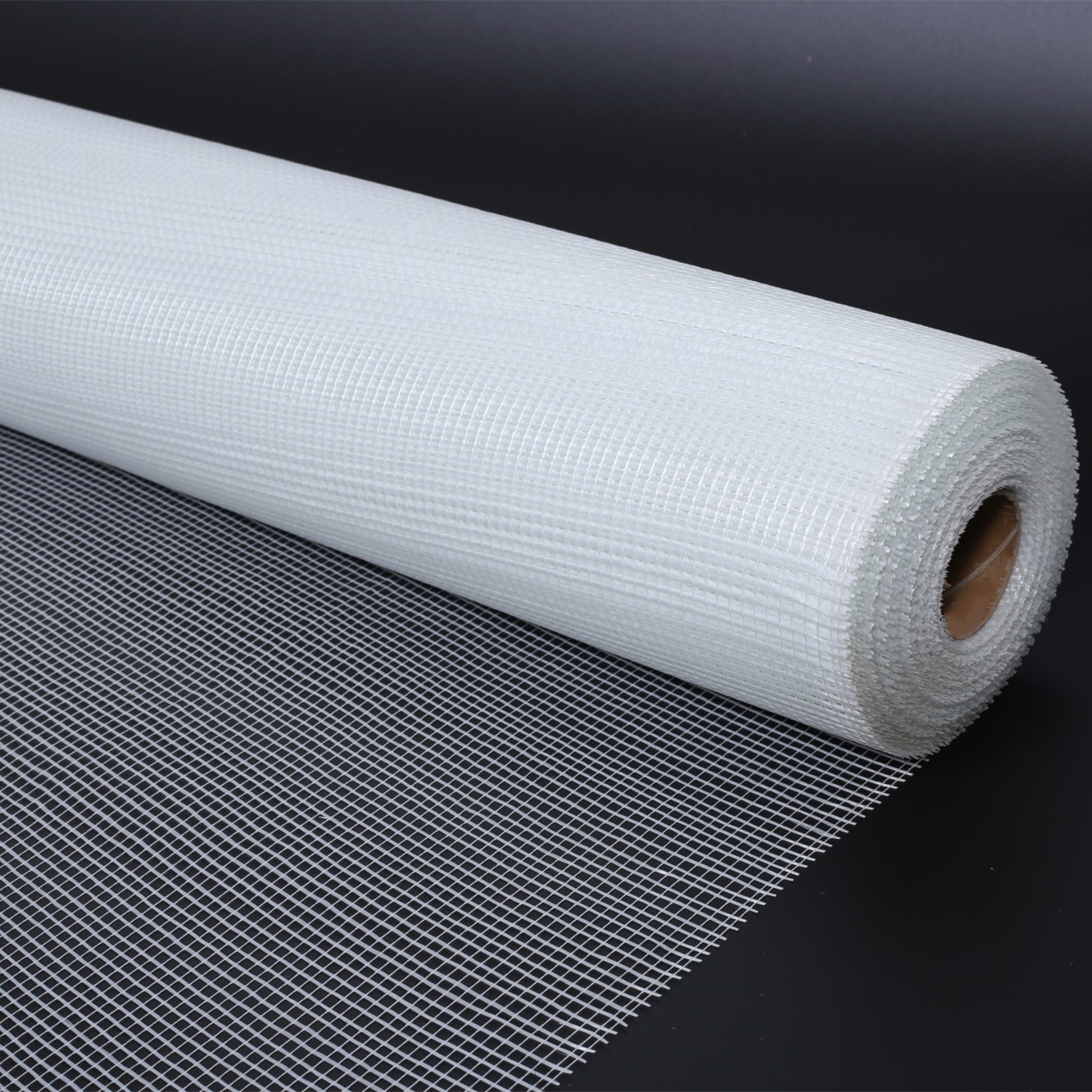
The modern building envelope, increasingly subjected to extreme thermal cycling and the rigors of high-density urbanization, imposes escalating mechanical and chemical demands. Shanghai Ruifiber’s architectural armamentarium is anchored by Fiberglass Mesh, Wall Corner Tape, Fiberglass Mesh Tape For Waterproofing, and Scrim. Within External Insulation and Finish Systems (EIFS), Eifs Fiberglass Mesh functions as the tensile sinew within cementitious base coats, homogenizing stress to preempt micro-cracking that compromises thermal transmittance and aesthetic integrity. The company’s Alkali Resistant Fiberglass Mesh, fortified with zirconia-doped AR-glass filaments and acrylic or SBR polymer coatings, routinely retains >85% tensile strength post-accelerated aging—a cardinal metric for 30+ year lifecycles mandated in European and North American retrofit mandates.
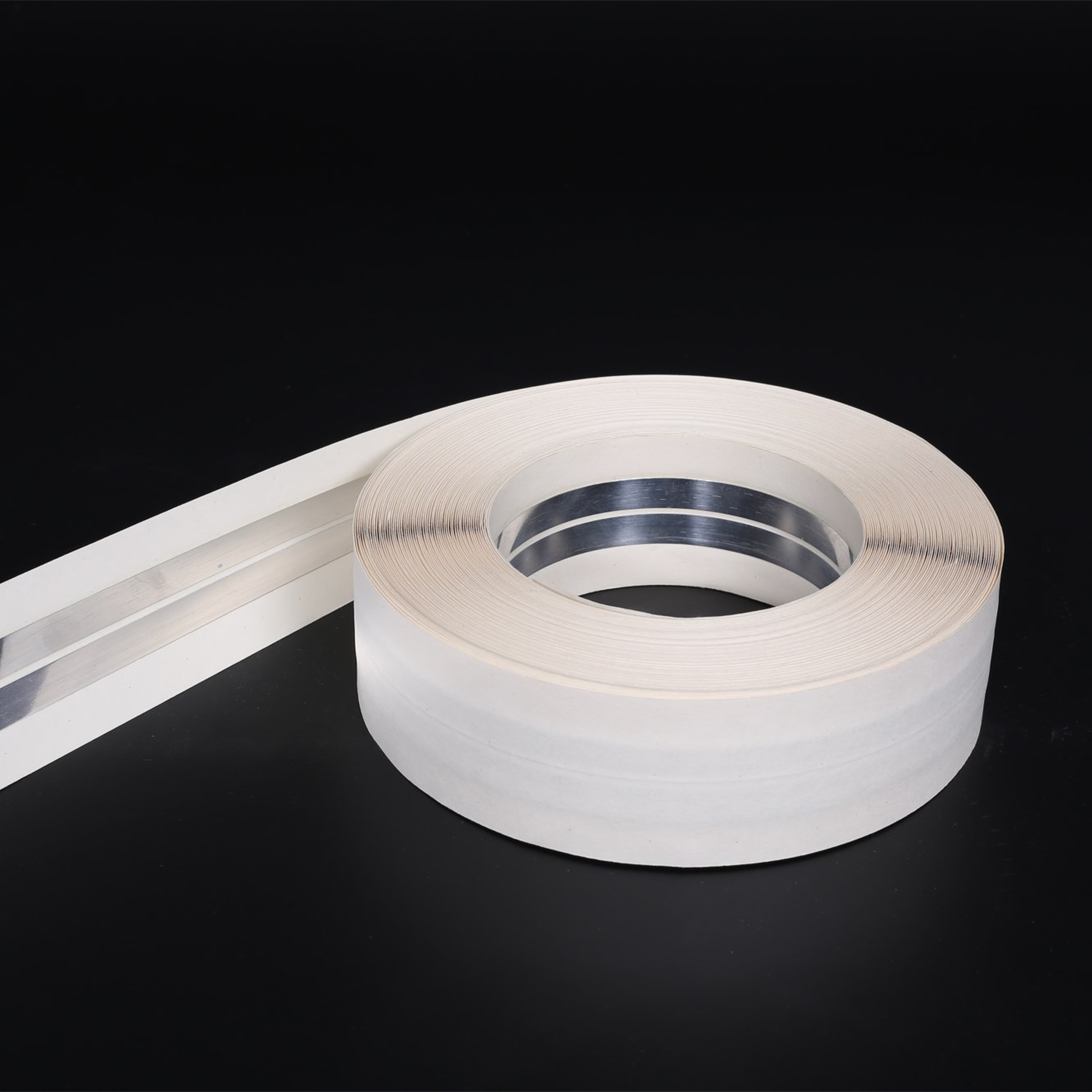
Addressing the perennial vulnerability of orthogonal junctions, Corner Tape and Wall Corner Tape integrate high-modulus fiberglass meshes or reinforced cellulose substrates to confer impact resilience at edges predisposed to settlement-induced shear. Concurrently, Self Adhesive Fiberglass Mesh Tape has transcended its niche to become a linchpin of modern remediation, delivering immediate tack and cohesive failure resistance with joint compounds, obviating pre-embedding in wet mortars. For hygroscopic or submerged zones, Fiberglass Mesh Tape For Waterproofing is laminated within liquid-applied membranes or cementitious slurries, operating as a crack-isolation lamina that preserves waterproofing integrity across decades. By curating China Fiberglass Mesh across a continuum—from ultrafine 2x2mm apertures for delicate plastering to Coarse Weave Fiberglass for heavy-gauge renders—Shanghai Ruifiber ensures specifiers secure precise architectural solutions, reinforcing its avatar as a hyper-responsive Fiberglass Mesh Supplier.
Sustainability and the Alkali Resistance Imperative in Global Construction
Beyond the façade, the composites sector—encompassing marine propulsion, wind energy capture, chemical containment, and automotive light-weighting—demands reinforcements reconciling extreme orthotropic loads with environmental aggression. Shanghai Ruifiber’s industrial textiles division commands Woven Roving, Heavy Woven Roving, Roving Fabric, and Woven Fiberglass Roving. These Bulk Fabric variants deploy high-tex continuous filament yarns in Coarse Weave Fiberglass or Open-Weave Roving architectures, optimized for rapid resin wet-out in hand lay-up, vacuum infusion, and filament winding. The Open-Weave Roving topology minimizes interstitial air entrapment, a sine qua non for void-free laminates in FRP pressure vessels, while Heavy Woven Roving accrues thickness with fewer plies, compressing production cycles without sacrificing interlaminar shear.
As 2026 unfolds, the global zeitgeist of sustainable infrastructure has elevated specifications for Alkali Resistant Fiberglass Mesh and Fiberglass Mesh For Concrete from best practice to statutory necessity. In cementitious matrices, standard E-glass succumbs to hydroxyl ion attack, precipitating filament dedensification and tensile attrition over decades. Shanghai Ruifiber countermands this via advanced coating chemistries—latex or acrylic emulsions forming nanometric sheaths around filaments—ensuring durability in high-pH screeds. This positions their Fiberglass Mesh as the preferred specification for Eifs Fiberglass Mesh, tasked with bridging micro-cracks across insulation strata for multi-decadal horizons.
Concurrently, Roofing Fiberglass Mesh modulates dimensional stability in bituminous and synthetic membranes, arresting wrinkling, splitting, and wind-uplift under thermal cycling. For civil engineering substrates, Fiberglass Mesh For Concrete imparts distributed tensile reinforcement in slabs and pavements, mitigating plastic shrinkage fissures and augmenting load diffusion. Operating as a Fiberglass Mesh Supplier China with a pan-global logistics cortex, Shanghai Ruifiber harmonizes outputs with regional idiosyncrasies—dispatching Fiberglass Mesh Tape compliant with ASTM E2098 or EN 13501 norms, and China Fiberglass Mesh tailored for the seismic and hygrothermal exigencies of Southeast Asian or Middle Eastern megaprojects. Recognition as a dependable Fiberglass Mesh Suppliers cohort stems from this capacity to synthesize coating tribology, textile mechanics, and local building physics, all while preserving the cost-velocity inherent to a premier Fiberglass Mesh Factory in China.
The Future Woven: Integration as the Cornerstone of Resilience
Peering toward the latter half of the 2020s, the fiberglass reinforcement market—projected to surpass $3 billion globally—is pivoting toward low-embodied carbon, circularity, and smart-material architectures. Procurement entities increasingly audit Fiberglass Mesh Manufacturers China not solely on unit economics but on environmental product declarations (EPDs), supply chain provenance, and R&D dexterity. Shanghai Ruifiber’s integrated model is the catalyst here; owning the value chain permits experimentation with bio-based sizing agents, energy-recuperative weaving, and hybrid Scrim structures that abate material intensity without compromising mechanostatistical performance. Demand for high-performance variants mirroring High Strength Fiberglass Scrim (in adjacent sectors) and multi-axial reinforcements parallels the ascent of prefabricated and modular construction, where dimensional certitude and mass-lightening are axiomatic.
Moreover, as Fiberglass Mesh Suppliers face existential scrutiny regarding supply chain resilience—exposed by recent geopolitical and logistic disruptions—Shanghai Ruifiber’s dual-capacity as manufacturer and trader affords a prophylactic buffer. The capacity to stock Bulk Fabric, maintain rolling Fiberglass Mesh inventories, and orchestrate agile dispatch from Shanghai’s deep-water ports ensures continuity for clients on multi-year infrastructure arcs. Coupled with the provision of third-party certified tensile datasets and Tensile Strength Laid Scrim Supplier-grade traceability (in synergistic product lines), the company transmutes transactions into symbiotic partnerships. In an epoch where infrastructure resilience is synonymous with socio-economic stability, Shanghai Ruifiber (Shanghai ruifiber) continues to weave the invisible sinews of global development, one meticulously engineered Fiberglass Mesh, one Woven Roving, one Wall Corner Tape at a time—evidencing that the edifice of tomorrow is not merely constructed, but intelligently reinforced by the convergence of integration, innovation, and unwavering fiduciary quality.
Address
Head office Add: BLDG#26,MAX Technology Park Phase II,Baoshan District,Shanghai China
Factory Add: Shanghai Ruifiber (Fengxian) Industry Park, Fengxian, Xuzhou, China
info@ruifiber.com
ruifibersales2@ruifiber.com
Phone
Sales: 0086-159-6804-7621
Support: 0086-186-2191-5640
Hours
Monday-Friday: 9am to 6pm
Saturday, Sunday: Closed
WANT TO WORK WITH US?
Post time: Jul-16-2026