
Why Global Buyers Switch to Integrated Suppliers for Fiberglass Mesh, Woven Roving, and Wall Corner Tape
The Hidden Cost of Fragmented Sourcing for Fiberglass Reinforcement Products
This is where the model earns its relevance. An integrated operation controls yarn sourcing, weaving/knitting, coating (alkali-resistant polymer for mesh; epoxy/polyester-compatible sizing for rovings), slitting, and packing. For the buyer, that control shows up in three practical ways:
- Consistency across batches. Whether you're ordering Fiberglass Mesh for Concrete formwork reinforcement or Roofing Fiberglass Mesh for underlayment, batch-to-batch variation in tensile strength and alkali retention directly affects your downstream warranty claims.
- Faster customization. Needing a non-standard Open-Weave Roving for a specialty composite part, or a different roll length on Wall Corner Tape? A factory that also runs its own export desk can say yes without checking with "the factory" (because they are the factory).
- Cost transparency. Without a trading margin layered on top, China Fiberglass Mesh and Woven Fiberglass Roving pricing lands with more room for the buyer's own margin.
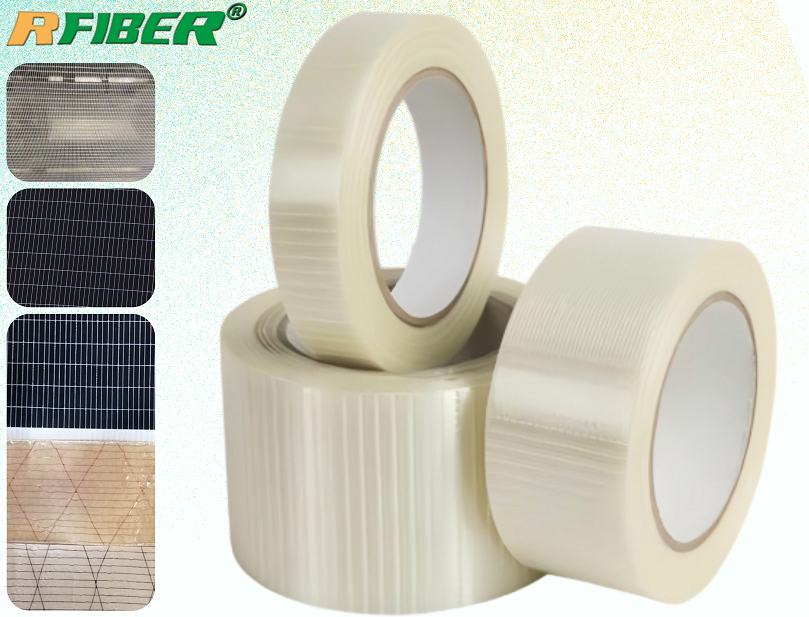
In the rapidly evolving construction, marine, and composite materials market of 2026, procurement managers and brand owners are rethinking their supply chains. Between rising ocean freight costs, stricter building codes on alkali resistance, and the push for "nearer-to-market" quality control, the old model of buying through layers of trading companies is losing ground. Increasingly, buyers searching for Fiberglass Mesh China, Woven Roving, Wall Corner Tape, and related reinforcement products are bypassing middlemen and going straight to integrated manufacturer-suppliers—companies that own the looms, run the coating lines, and manage export documentation under one roof. Shanghai Ruifiber, a Shanghai-based industrial-trading integrated enterprise is one of the suppliers sitting at the center of this shift.
Why "Industrial + Trading" Matters for Fiberglass Buyers
Most buyers start their search with broad terms like Fiberglass Mesh Supplier or Fiberglass Mesh Manufacturer, only to discover that "supplier" can mean anything from a factory to a reseller to a third-tier agent quoting from someone else's stock. In fiberglass reinforcement, that ambiguity has real consequences. A Self Adhesive Fiberglass Mesh Tape that peels prematurely, or an Alkali Resistant Fiberglass Mesh that fails after two winters, isn't just a product defect—it's a callback cost, a damaged relationship with the end contractor, and in some markets, a code-compliance liability.
The same goes for heavier-weight reinforcements. Woven Roving, Heavy Woven Roving, Marine-Grade Roving, and Boat Cloth are often listed interchangeably online, but the weave density, roving tex, and sizing compatibility with polyester/vinylester resins vary significantly between a specialized Fiberglass Mesh Factory and a generalist trader repacking bulk fabric. For laminators working on hulls or decks, a poorly matched Laminating Roving translates into resin starvation, print-through, and elongation issues under load.
Shanghai Ruifiber's setup reflects exactly this logic—production lines feeding directly into export documentation, QC checkpoints aligned with both Chinese GB standards and the EN/ASTM references international buyers cite, and a sales team that can discuss both weave specs and Incoterms in the same call.
Product Deep-Dive: From Wall Systems to Marine Laminates
1. Fiberglass Mesh and Tape Systems for Construction
The backbone of Ruifiber's export volume sits in Fiberglass Mesh lines—Alkali Resistant Fiberglass Mesh woven from C-glass or E-glass yarn, coated with acrylic or styrene-acrylic polymer, and cured for dimensional stability. These go into Eifs Fiberglass Mesh applications (ETICS external insulation systems across Europe and increasingly in North America), Fiberglass Mesh Tape For Waterproofing in wet rooms and balconies, and Roofing Fiberglass Mesh as a secondary reinforcement under bituminous membranes.
A closely related SKU that deserves its own mention: Wall Corner Tape (often searched alongside Corner Tape and Scrim). In EIFS and stucco systems, the corner is where most impact damage concentrates. Ruifiber's Wall Corner Tape combines a central crease-aligned Scrim with factory-folded edges, so applicators get a 90° line without hand-folding on site—a small detail that reduces waste and callback rates. For interior drywall repair, Self Adhesive Fiberglass Mesh Tape remains a high-turnover SKU, and here again the differentiator is coating formulation: a tape that holds adhesion through temperature swings in unconditioned warehouses tends to stay on the spec sheet.
2. Woven Roving, Boat Cloth, and the Composite Side
On the composites side, the terminology gets denser—and that's where SEO lists like Woven Roving, Roving Fabric, Heavy Woven Roving, Woven Fiberglass Roving, Bulk Fabric, Coarse Weave Fiberglass, Open-Weave Roving, Boat Cloth, Marine-Grade Roving, and Laminating Roving all converge. They're not identical, but they share a family resemblance: heavy yarns (typically 600–2400 tex rovings), plain or twill weaves, low crimp, and sizing designed for unsaturated polyester, vinyl ester, or epoxy systems.
Ruifiber supplies into this segment with an eye on two buyer profiles. The first is marine laminators—boat builders and repair yards—who need Marine-Grade Roving and Boat Cloth that won't delaminate under cyclic loading and moisture. Here, Laminating Roving with compatible sizing and low fuzz generation makes the difference between a clean laminate and a resin-hungry one. The second profile is industrial/commercial FRP fabricators using Heavy Woven Roving in combination with chopped strand mat (CSM) for hand lay-up or infusion—think chemical tanks, truck fairings, and infrastructure FRP wraps. For these buyers, Bulk Fabric roll consistency and the ability to hold 500–1000 m rolls without telescoping in transit matter more than clever marketing.
How Shanghai Ruifiber Positions Among "Fiberglass Mesh Manufacturers China"
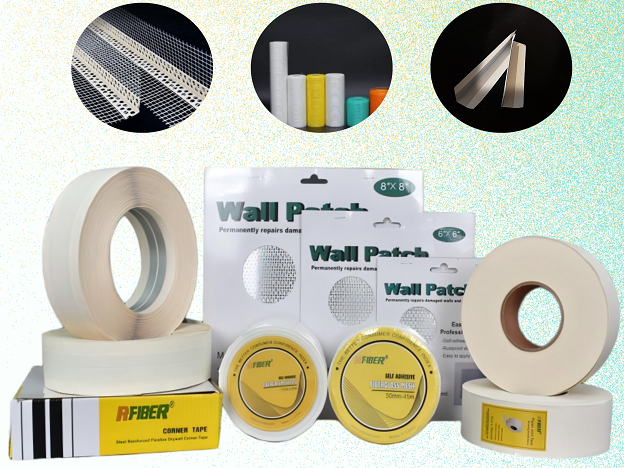
Search intent is worth unpacking here. When a buyer types Fiberglass Mesh Manufacturers, Fiberglass Mesh Manufacturer, Fiberglass Mesh Factory, Fiberglass Mesh Supplier China, Fiberglass Mesh Suppliers, Fiberglass Mesh In China, or Fiberglass Mesh Manufacturers China, they're usually at the consideration stage—past "what is fiberglass mesh" and into "who can deliver 20-foot containers of 160 g/m² alkali-resistant mesh, Labc checked, by next month." That's a different conversation from the one generic B2B directory listings have been optimized for.
Ruifiber's positioning sits on three legs:
- Product breadth under one roof. From light Scrim and Self Adhesive Fiberglass Mesh Tape all the way to Heavy Woven Roving and Coarse Weave Fiberglass, the catalog covers both construction and composites. For a distributor carrying both EIFS accessories and marine fabrics, that means one PO, one QC point, one logistics chain.
- Spec-level dialogue. Sales engineers can talk yarn tex, mesh density (e.g., 4×4 mm / 5×5 mm), coating solid content, alkali-retention after 28-day NaOH soak, roving compatibility with specific resin brands. That matters when the buyer's customer is an engineer, not a shelf-stocker.
- Export rhythm. Shanghai port proximity + in-house documentation means RFQ → sample → trial order → recurring container flow doesn't stall at "waiting for the factory to confirm."
The Bottom Line for Procurement Teams
If your current vendor list for China Fiberglass Mesh, Woven Roving, or Wall Corner Tape runs through two or three trading layers, the math in 2026 probably doesn't add up the way it did in 2019. Freight volatility has stabilized compared to the pandemic peak, but margin pressure hasn't eased—which means the arbitrage left in this category is operational, not logistical. Buying from an integrated Fiberglass Mesh Manufacturer that also understands export packaging, pallet height limits for different destination ports, and the difference between EN 13496 and ASTM E2098 test methods is where the real efficiency sits.
Shanghai Ruifiber isn't the only Fiberglass Mesh Supplier China with a loom and a shipping mark, but the combination of product range (Scrim → Self Adhesive Fiberglass Mesh Tape → Alkali Resistant Fiberglass Mesh → Heavy Woven Roving → Marine-Grade Roving), Shanghai port logistics, and a sales team that answers technical questions without "let me check with production" delays is the reason more RFQs this year are landing in Ruifiber's inbox rather than with pure traders.
For buyers weighing a switch—or first-time importers benchmarking Fiberglass Mesh Manufacturers China—the practical next step is a sample comparison: pick one SKU you already move volume on (a 145 g/m² Eifs Fiberglass Mesh, a 600 gsm Woven Roving, a 50 m Wall Corner Tape) and ask for a side-by-side against your current stock. The delta in coating feel, edge cutting, and packaging usually tells the story faster than a 20-page catalog.
Address
Head office Add: BLDG#26,MAX Technology Park Phase II,Baoshan District,Shanghai China
Factory Add: Shanghai Ruifiber (Fengxian) Industry Park, Fengxian, Xuzhou, China
info@ruifiber.com
ruifibersales2@ruifiber.com
Phone
Sales: 0086-159-6804-7621
Support: 0086-186-2191-5640
Hours
Monday-Friday: 9am to 6pm
Saturday, Sunday: Closed
WANT TO WORK WITH US?
Post time: Jun-29-2026