
As Climate Volatility Forces a Rebuild-First Culture, Has the Construction Industry Been Treating Its Most Critical Reinforcement Layer — Fiberglass Mesh, Scrim and Woven Roving — as a Commodity for Too Long?
From record-breaking floods in Central Europe to another historic hurricane season in the Atlantic basin, and from the U.S. Infrastructure Investment and Jobs Act pushing bridge and road rehabilitation to Europe's wave of deep energy-retrofit programs on existing housing stock, one reality keeps surfacing in specification meetings: the materials hidden inside walls, roofs, and overlays are now deciding project lifecycles more than ever before. When an EIFS façade debonds, when a rooftop waterproofing membrane tears under thermal stress, or when a concrete overlay throws reflective cracks six months after a highway lane closure — the root cause is rarely "bad cement" or "wrong fasteners." More often, it traces back to the reinforcement layer itself: the Alkali Resistant Fiberglass Mesh in the base coat, the Roofing Fiberglass Mesh under the membrane, the Fiberglass Mesh For Concrete acting as a crack-control interlayer, or the Woven Roving forming the structural laminate in a marine hull. And that layer was likely specified — or procured — as a price-per-square-meter line item, not as engineered cloth.
That gap between "mesh as cost" and "mesh as performance" is exactly where Shanghai Ruifiber positions itself differently. Operating as an integrated fiberglass mesh factory and global supply partner rather than a trading middleman, Shanghai Ruifiber (with its high-performance brand line carried globally under the GADTEX identifier) works with contractors, distributors, panelizers, and FRP fabricators in 50+ countries. The product range covers the full spectrum — from Eifs Fiberglass Mesh and Self Adhesive Fiberglass Mesh Tape to Heavy Woven Roving, Bulk Fabric, and Corner Tape / Wall Corner Tape systems — all under one roof: yarn selection → weave/laid-scrim process → coating/sizing → slitting → QC → export packing.
Why EIFS Fiberglass Mesh and Alkali Resistant Fiberglass Mesh Decide Whether Energy-Upgraded Buildings Age Gracefully or Eat Their Own Budget
The global push for building decarbonization has turned building envelopes into active climate infrastructure. Retrofit programs across North America, the EU, and parts of the Gulf are wrapping older buildings in continuous insulation — and that means EIFS (Exterior Insulation and Finish Systems) are being deployed at unprecedented scale. An EIFS base coat without properly specified mesh is not a savings measure; it is a liability. The mesh is what carries the tensile load when the insulation board expands, contracts, and tries to move relative to the substrate.
Eifs Fiberglass Mesh used in base coats must survive an aggressive environment: fresh cementitious materials sit at pH 12–13, and any reinforcement that cannot resist alkali attack will lose tensile capacity within a few years — exactly when hairline cracks appear, moisture enters, and the system begins to debond from the inside out. This is why Shanghai Ruifiber's approach to Alkali Resistant Fiberglass Mesh starts at the filament level: AR-glass chemistry with documented zirconia content, followed by a polymer coating system engineered for both alkali protection and mechanical keying into the base coat. Available mesh apertures (commonly 4×4 mm, 5×5 mm, 5×6 mm, and 10×10 mm equivalents) and weights (typically 145 g/m²–300+ g/m²) are matched to the impact zone, substrate type, and finish system thickness.
For specifiers searching China Fiberglass Mesh, Fiberglass Mesh In China, or Fiberglass Mesh Manufacturer listings online, the practical question is this: can the supplier show you a COA that correlates to a real production batch — with tensile, knot-node integrity, and alkali-resistance data — or just a PDF template? Shanghai Ruifiber's factory-direct QA system means every jumbo roll carries traceable data back to line settings, not just a warehouse picking slip.
Roofing Fiberglass Mesh, Fiberglass Mesh Tape For Waterproofing, and Self Adhesive Glass Tape
Severe weather has shifted the waterproofing conversation from "vapor drive" theory to "survival hardware." When rainfall intensities break local design storms once-in-a-decade records two years in a row, roof drainage edges, parapet terminations, wall-to-roof transitions, and balcony pan flashings become the front line. And the products that protect those transitions are humble: Roofing Fiberglass Mesh for torch-applied or self-adhered membrane reinforcement, and Fiberglass Mesh Tape For Waterproofing / Self Adhesive Fiberglass Mesh Tape for sealing joints, penetrations, and termination bars.
Unlike a façade panel where the mesh is buried, these waterproofing tapes and mesh-reinforced sheets operate in a very exposed regime — UV windows, ponding water, thermal shock, and mechanical traffic during maintenance. Shanghai Ruifiber's Fiberglass Mesh Tape and Self Adhesive Fiberglass Mesh Tape products use a carrier mesh with controlled elongation (so the tape does not stretch out of tolerance and create gaps at laps) and adhesive/release systems selected for the substrate mix most commonly seen on site: modified bitumen, EPDM/TPO transition strips, concrete, primed metal, and gypsum board. The result is a detail tape that grabs immediately and ages without turning into a peel-and-stick failure waiting to happen.
For building product distributors and importers evaluating Fiberglass Mesh Supplier, Fiberglass Mesh Supplier China, or Fiberglass Mesh Suppliers more broadly, the differentiator is rarely "who has the lowest quote on a pallet." It is: who can keep roll geometry tight, keep adhesive mass balanced so rolls don't telescope in containers, and keep node-integrity stable so the mesh doesn't fracture when folded around a drip edge? Those are factory disciplines, not purchasing tricks.
Fiberglass Mesh For Concrete as a Practical, Proven Crack-Control Strategy
After extreme-weather winters and flood events, municipalities and DOTs are under pressure to reopen lanes faster and keep them open longer. That often means thin bonded overlays, partial-depth repairs, and shotcrete restoration rather than full-depth replacement. The economics only work if the repair stays intact — and that is where Fiberglass Mesh For Concrete (specifically Alkali Resistant Fiberglass Mesh) earns its specification.
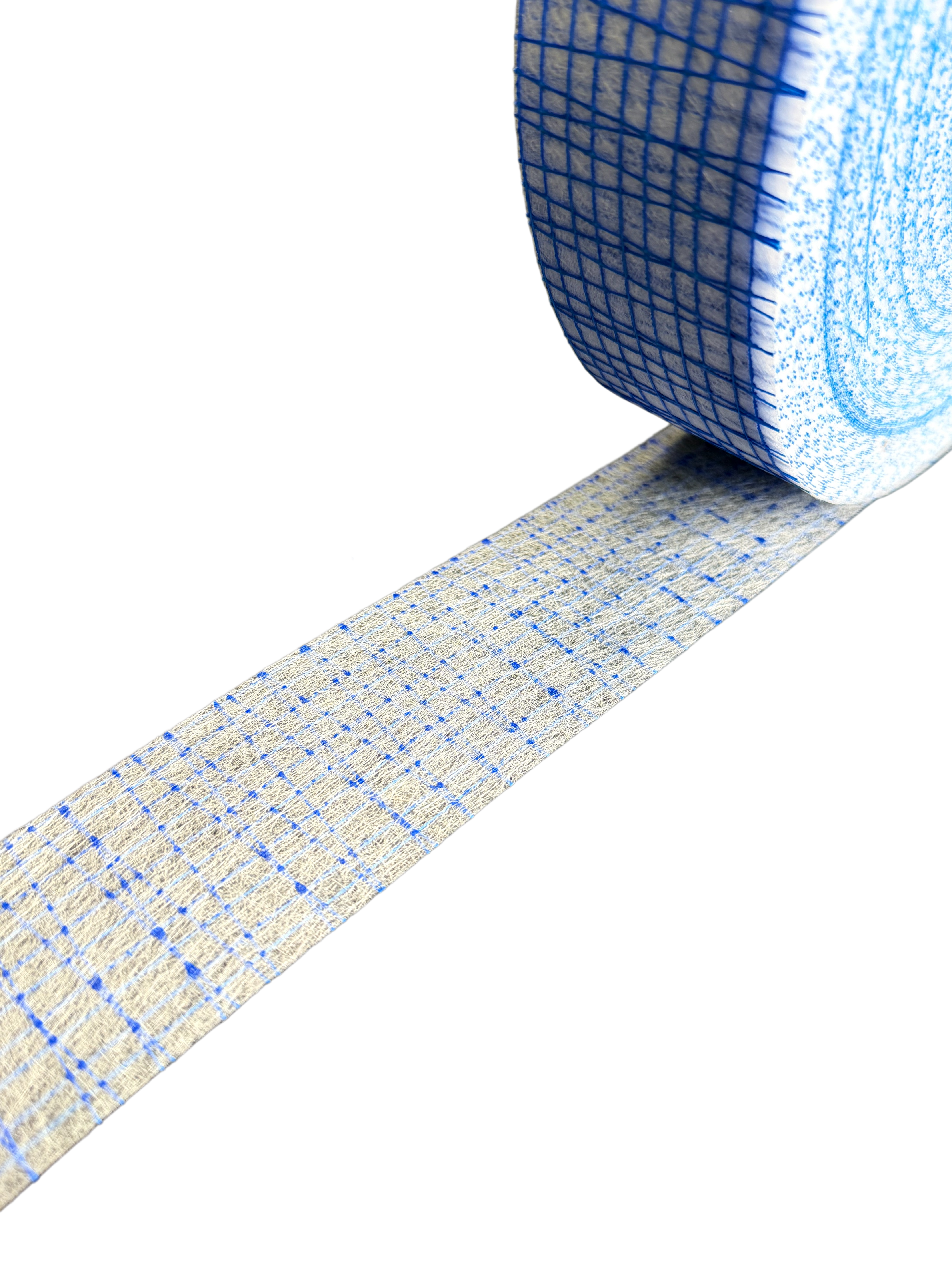
Placed in the upper third of an overlay or embedded just beneath a repair surface, the mesh bridges micro-cracks before they propagate into through-cracks. Because it is AR-grade, it does not degrade in the cementitious matrix the way untreated glass would. Shanghai Ruifiber supplies Fiberglass Mesh For Concrete in roll widths and lengths optimized for walk-behind chopper guns, hand-trowel crews, and spray-applied systems alike, with edge sealing and coating options that improve embedment and reduce fuzz-up during handling.
This is also where the "cheapest roll wins" mentality quietly backfires. A mesh that softens in alkali or whose nodes open during troweling does not just under-reinforce — it creates a plane of weakness that can mirror right up through the surface. For agencies and contractors who have lived through that lesson, the search for Fiberglass Mesh Manufacturers and Fiberglass Mesh Manufacturer partners who can document chemistry and batch data has become as routine as checking slump.
Wall Corner Tape and Corner Tape as Engineered Transition Pieces, Not Trim Strips
If walls could speak, the first thing they would complain about after a bad winter would be their corners. Wall Corner Tape and Corner Tape are often dismissed as "trim accessories," but on any elevation they are the highest-stress transition: two planes meeting at 90°, wind pressure trying to peel the insulation system, and impact risk from carts, ladders, and landscaping equipment. A standard bead with no mesh reinforcement, or a paper-faced bead whose core cannot handle movement, is a scheduled replacement — not a finished detail.
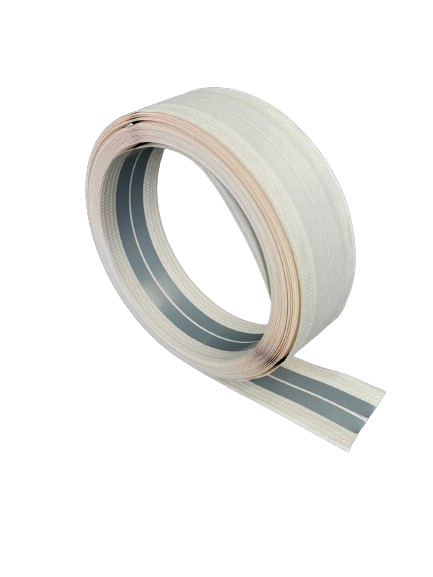
Shanghai Ruifiber's Corner Tape / Wall Corner Tape systems integrate Alkali Resistant Fiberglass Mesh wings into a pre-formed profile so that the corner is not just covered but structurally reinforced. The mesh wings extend far enough into each plane to develop proper overlap with the field mesh, eliminating the most common failure mode: a clean crack exactly where the bead wing ends. Available in standard 90° and adjustable-offset versions, with or without pre-applied adhesive strip options for dry-lining speed, these systems are built for the way crews actually install — fast — not the way catalogs imagine.
Woven Roving, Boat Cloth and Why Marine-Grade Roving Force a Conversation About the Factory
Step away from façades, and the same logic scales up. In marine hulls, corrosion-resistant tanks, and large-format FRP components, reinforcement is not a surface accessory — it is the skeleton. Terms like Woven Roving, Roving Fabric, Heavy Woven Roving, Woven Fiberglass Roving, Coarse Weave Fiberglass, Open-Weave Roving, Boat Cloth, Marine-Grade Roving, and Laminating Roving all describe the same truth: the textile must carry load, survive fatigue, and wet out cleanly.
For Bulk Fabric buyers — laminators who think in resin uptake, plies, and shear stiffness — the difference between a trading-sourced roll and a factory-controlled roll shows up as:
- 1.inconsistent roving alignment → local soft spots in the laminate
- 2.crimp too high → reduced compressive strength
- 3.width drift → scrap at the table
Shanghai Ruifiber's Xuzhou production base runs looms with tension-control systems and inline inspection, producing Woven Roving and Heavy Woven Roving in the weight ranges laminators actually use (approx. 300–1200 g/m²), with E-glass/ECR-glass options and sizing families matched to polyester, vinyl ester, and epoxy. Laminating Roving programs can be supported with custom widths and packaging that survive jobsite handling — because a roving roll that arrives telescoped is already costing money before the first resin mix.
The Search Intent Behind "Fiberglass Mesh Manufacturers China" Has Changed — and Why Factory-Direct Is Winning Again
If you run search-volume analysis on the terms Fiberglass Mesh Factory, Fiberglass Mesh Supplier, Fiberglass Mesh Manufacturer, Fiberglass Mesh Manufacturers China, Fiberglass Mesh Manufacturers, China Fiberglass Mesh, Fiberglass Mesh Suppliers, Fiberglass Mesh Supplier China, Fiberglass Mesh In China — the click patterns tell a clear story. Importers are not browsing for inspiration. They are clicking because they have a jobsite problem: mesh that softened, tape that crawled, a corner that cracked, or a roving lot that did not match the last container. The search is really a risk-mitigation exercise.
Shanghai Ruifiber wins those searches not with the longest keyword list, but with the shortest accountability chain: we make it → we test it → we ship it. That is the structural advantage of being a fiberglass mesh factory rather than a reseller. It is also why the company continues to invest in:
- 1.tighter process windows (oven profiles, binder add-on, calender nip control)
- 2.wider spec coverage (AR / E / C-glass; polyester laid scrims; nonwoven hybrids)
- 3.and export-readiness (palletizing, anti-moisture packing, documentation discipline)
Because in a market where everyone can print a spec sheet, the differentiator is who can reproduce it at 3 a.m. on a Tuesday when the container is already on the berth.
Conclusion — Reinforcement Is Not Glamorous, Until the Day It Is Everything
The construction and composites industries are entering a cycle where "good enough" reinforcement is being retired by climate reality, warranty risk, and owners who no longer accept premature façade repairs, roof leaks, or patched concrete as "part of doing business." Whether the application is an Eifs Fiberglass Mesh saving a retrofit elevation from crack-propagation, a Self Adhesive Fiberglass Mesh Tape keeping a flashing watertight, a Fiberglass Mesh For Concrete extending an overlay's service life, a Corner Tape / Wall Corner Tape protecting the most exposed transition on the building, or a Marine-Grade Roving / Woven Roving forming the skeleton of a laminated structure — the common denominator is the same: the mesh must be engineered, documented, and factory-controlled.
Shanghai Ruifiber (GADTEX) invites engineers, distributors, panelizers, and FRP fabricators to move the conversation beyond price-per-square-meter. Contact our technical team to discuss specification matching, request trial rolls, or arrange a factory visit. Because when the storm comes — or the traffic comes back — the mesh is the one thing you cannot retroactively fix.
Address
Head office Add: BLDG#26,MAX Technology Park Phase II,Baoshan District,Shanghai China
Factory Add: Shanghai Ruifiber (Fengxian) Industry Park, Fengxian, Xuzhou, China
info@ruifiber.com
ruifibersales2@ruifiber.com
Phone
Sales: 0086-159-6804-7621
Support: 0086-186-2191-5640
Hours
Monday-Friday: 9am to 6pm
Saturday, Sunday: Closed
WANT TO WORK WITH US?
Post time: Jun-12-2026