
In-Depth Analysis of Joint Tape: A Comprehensive Guide from High-Strength Anti-Cracking Technology to Global Construction Applications
Introduction: The "Anti-Crack Guardian" in Concealed Works
In the grand projects of modern architectural decoration, we are often easily attracted by gorgeous wallpapers, exquisite floor tiles, or eco-friendly paints, overlooking those key auxiliary materials hidden beneath the surface that determine the lifespan of the renovation. Joint Tape, as a reinforcing material specifically designed for gypsum board joint treatment, is precisely such an "invisible hero." Although it is just a thin roll of paper tape, it bears the heavy responsibility of connecting boards, dispersing stress, and preventing wall cracks.
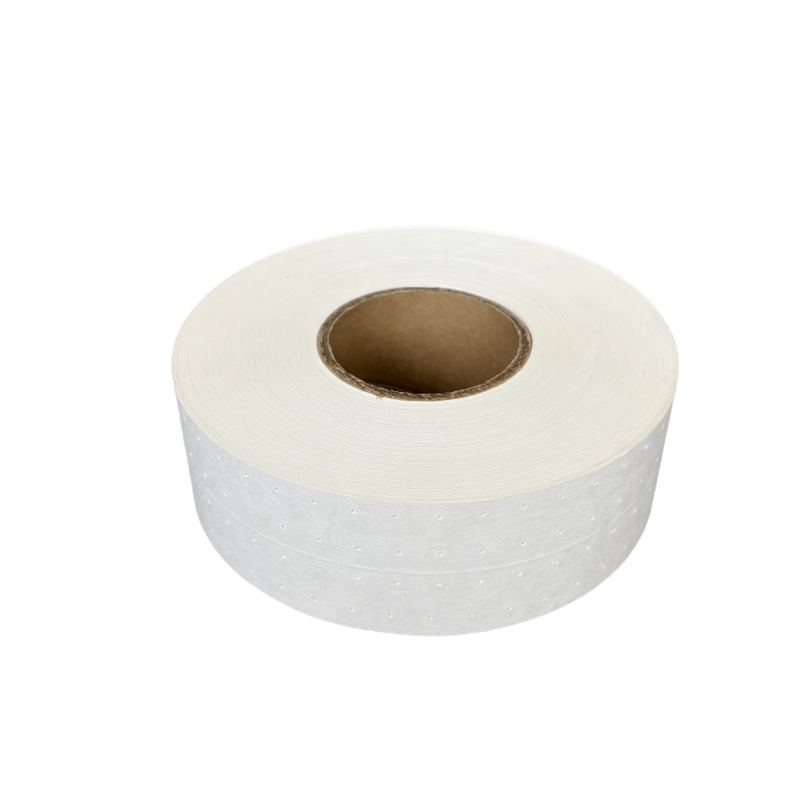
As global construction standards for Indoor Air Quality (IAQ) and building durability become increasingly stringent in 2026, joint tape has long ceased to be a simple "paper strip." Instead, it has evolved into a composite functional material integrating high-strength fibers, breathable hole technology, and eco-friendly binders. This article will take you on an in-depth journey into the technical core, market classification, and its pivotal role in the wave of prefabricated construction.
The Technical Core: Why Does Paper Tape Need to "Breathe" and be "Tough"?
The quality of joint tape directly determines whether the wall will crack within the first year of delivery. High-quality joint tape (such as high-strength types) typically uses long-fiber wood pulp paper and incorporates chemical fibers for reinforcement during the manufacturing process. This interlaced fiber structure endows the tape with extremely high tensile strength (usually exceeding 5000N), enabling it to withstand stresses caused by slight building settlement or thermal expansion and contraction.
A more critical technical detail lies in the "perforation" process. The surface of modern joint tape is covered with tiny air holes formed by laser or pin perforation. The role of these holes cannot be underestimated: they ensure that air behind the tape is smoothly expelled during the application of the joint compound, preventing the formation of hollows. Meanwhile, the compound penetrates these holes to form a "mechanical anchoring" effect, bonding the tape tightly with the gypsum board to become one integrated unit.
Product Matrix: From Ordinary Home Decoration to Extreme Environments
According to standards such as JC/T2076-2011 and market demands, joint tapes are mainly categorized into three types, corresponding to different application scenarios.
Ordinary Wood Pulp Paper Tape: This is the most common type, with lower costs, suitable for ordinary home decoration in dry environments. It has good flexibility and is easy to install but tends to soften in humid conditions.
High-Strength Joint Tape: This is the mainstream in the commercial construction market. By adding chemical fibers, its wet strength and tensile strength are significantly improved. In high-end office buildings and hotel projects in 2026, this tape has become standard to prevent fine cracks.
Fiberglass Reinforced Type: This is an innovative product for special environments. It possesses excellent corrosion and crack resistance, designed specifically for basements, bathrooms, or high-humidity areas. Although it is harder and slightly more difficult to cut, its durability is unmatched.
Construction Process: 30% Material, 70% Workmanship
Even with the most high-end joint tape, cracking cannot be avoided if the installation is improper. The standard installation process requires the use of specialized joint compound. First, fill the gypsum board joints with the compound, then press the tape (usually with a central pre-crease to facilitate inside and outside corner installation) into the wet compound.
The key technique lies in "smoothing": use a taping knife to press from the center to the sides, squeezing out excess material to ensure there are no air bubbles between the tape and the board. The new prefabricated buildings of 2026 demand extremely high precision in board splicing, which also drives joint tape to develop towards being thinner, stronger, and more conformable to meet the needs of ultra-thin plastering layers.
The key technique lies in "smoothing": use a taping knife to press from the center to the sides, squeezing out excess material to ensure there are no air bubbles between the tape and the board. The new prefabricated buildings of 2026 demand extremely high precision in board splicing, which also drives joint tape to develop towards being thinner, stronger, and more conformable to meet the needs of ultra-thin plastering layers.
Market Trends: Prefabricated Construction and Green Supply Chains
Looking ahead to 2026 and beyond, the joint tape market is undergoing profound changes. With the popularity of "prefabricated construction," traditional on-site wet operations are decreasing, replaced by factory-prefabricated board components. This poses a challenge to the "versatility" of joint tape—it must be able to adapt to the joint treatment of various new types of boards (such as calcium silicate boards and magnesium boards).
Furthermore, global supply chain requirements for environmental protection are increasing. Buyers are concerned not only with whether the tape itself is non-toxic and odorless but also with its carbon footprint during production. International brands like Saint-Gobain maintain stable pricing and market share in cities like Shanghai, Ningbo, and Shenyang not only because of their product quality but also because they have established a comprehensive green supply chain system, capable of providing products that meet international standards such as LEED certification.
Conclusion: Details Determine Success
Joint tape, a minor character often categorized as "auxiliary material" in building material lists, is actually the key to determining the lifespan of the wall system. From high-strength fiber formulations to precise laser perforation, every meter of tape embodies the wisdom of materials science. In today's pursuit of "good houses," choosing a high-quality joint tape is laying the most solid foundation for the building's long-term viability.
Address
info@ruifiber.com
ruifibersales2@ruifiber.com
Phone
Sales: 0086-159-6804-7621
Support: 0086-186-2191-5640
Hours
Monday-Friday: 9am to 6pm
Saturday, Sunday: Closed
WANT TO WORK WITH US?
Post time: May-29-2026